





Let’s not wait for our future infrastructure to become overwhelmed, says Kathryn Tyley, President’s Future Leader 2024-2025.

We know that the climate is changing.
We can no longer rely on how things were before.
We must be ready to face unreliable and more extreme weather, including flooding, droughts, heat and wind.
Climate change adaptation is how we do that. It means preparing people and infrastructure to function reliably under a range of future climate conditions.
In the UK, progress to adapt our infrastructure to climate change has been poor.
While the ICE has called on the government to address this, it’s equally important to ask: what can individual civil engineers do to improve climate resilience within their own projects?
What does climate change adaptation look like in the world of infrastructure?
The built environment plays a crucial role in adapting to climate change. It’s also particularly vulnerable to its risks.
Adapting to climate change isn't simply good design. It’s a fundamental shift in how we plan, design and maintain infrastructure.
Projects that consider what our future climate might be like from the outset are inherently more resilient. For example:
- Drainage systems that account for more rainfall
- Buildings designed to remain comfortable and safe in hotter, wetter and windier conditions
- Water infrastructure that reduces demand, boosts supply and incorporates rainwater harvesting to withstand droughts
- Nature-based solutions such as soil conservation, peatland restoration and habitat creation to stabilise ecosystems (and store carbon)
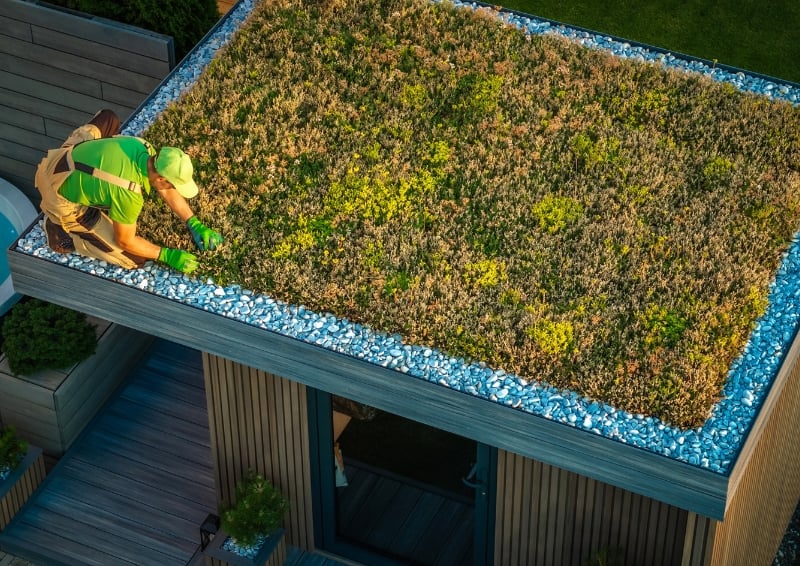
- Urban greening, which provides shade and cooling during heatwaves, improves biodiversity, and helps manage surface water during more intense storms
Who is responsible for ensuring that we adapt to climate impacts?
While national, regional and local governments are responsible for setting policy and allocating funding, individual engineers and project teams are critical to delivering practical adaptation on the ground.
Civil engineers, in particular, are at the front line of this challenge – whether by designing new assets or maintaining existing ones.
What can engineers do to ensure their projects adapt to climate change?
1. Consider climate adaptation early in the project
The early stages of a project offer the greatest opportunity to add value. The potential for changing scope is high and the cost of doing so is low.
It’s the time to set the design life of the asset and what the level of service should be over that time.
It’s when site-specific vulnerability and risk assessments take place to identify potential climate hazards and how they may evolve and impact service.
2. Integrate climate data into design
Many current infrastructure assets have been designed based on historical needs. These are now outdated as our scientific understanding and modelling improves, and we get more data on our new climate.
The infrastructure being developed now will potentially be in use for the next century.
It’s important that we use the most up to date and reliable projections of future climate, while allowing for uncertainty.

3. Use adaptation pathways
The above is not to say that all infrastructure should be designed for the worst- case scenario.
Overdesign can lead to higher carbon and economic costs or potentially stop a project from moving forward.
Adaptation pathways allow for future interventions if or when conditions reach certain thresholds by using modular or upgradable systems.
The ICE is developing a new publicly available specification (PAS) standard on these pathways to help guide the industry.
Find out more about the standard
4. Prioritise no- and low-regret options including nature-based solutions
These are actions that deliver benefits regardless of how the climate changes. Examples include:
- Enhancing natural drainage through green infrastructure
- Increasing building ventilation to reduce overheating
- Designing with ecological diversity and redundancy, including native and climate-tolerant varieties
- Nature-based solutions are especially powerful here, often cheaper, more flexible and more publicly acceptable than traditional grey infrastructure.

5. Stay educated and engage across disciplines
Engineers should stay aware of updates to standards and best practice on climate adaptation, recognising that statutory guidance may lag behind the latest science.
Climate adaptation often sits at the intersection of disciplines.
Civil engineers should recognise the limits of our own expertise and actively engage with ecologists, climate scientists, landscape architects and public health experts.
Finally, engineers should seek CPD opportunities related to climate resilience.
Explore the ICE Knowledge Hub for CPD content
We must act now
Climate change adaptation isn’t a specialist add-on, it’s an essential part of civil engineering today.
The skills and influence of ICE members mean they are uniquely placed to shape resilient infrastructure that protects people, supports communities, and delivers long-term value.
Let’s not wait for our future infrastructure to become overwhelmed. The time to act is now.

You may also be interested in

- Type
- Awards and competitions
Recycled materials offer sustainable future for concrete in royal patron award-winning research
The annual award celebrates outstanding ideas, research and best practice.

- Type
- News
What do the 2026 party conferences mean for infrastructure?
The ICE breaks down the headline announcements from five of the major UK parties.

- Type
- Explainer
What you need to know about PAS 4010: improving productivity in infrastructure development and delivery
A new standard, which will guide the sector in improving productivity, is set to launch in 2026.