





People’s experiences of infrastructure are shaped by a variety of factors. Overlooking these leads to consequences such as inconvenience, exclusion and even safety risks.
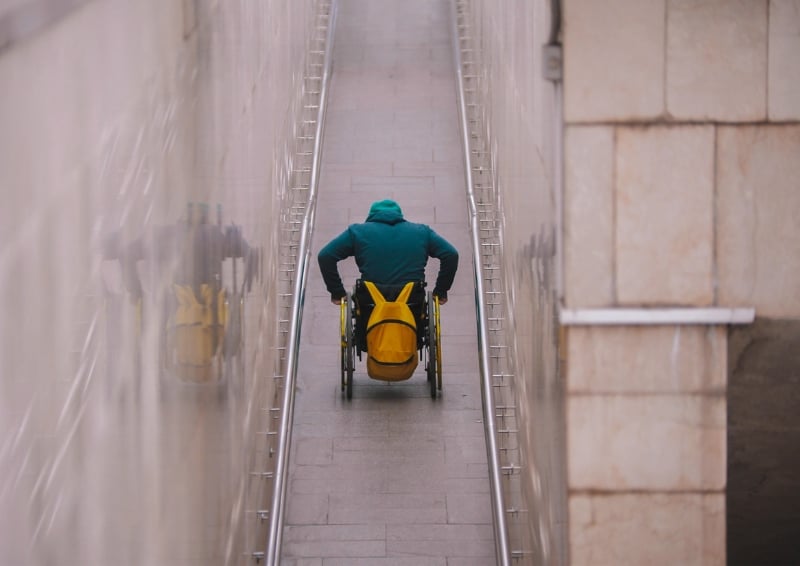
Infrastructure is not experienced equally by all.
Research, industry guidance, evolving standards and growing awareness have all helped highlight this important truth.
The ICE's recent work on inclusive infrastructure raises a crucial question: how can we ensure that the systems, places and services we create work for our people and communities?
The question itself isn’t new. What feels different today is the growing realisation that inclusion can't remain a specialist topic or a consideration to be addressed on the periphery.
It must be embedded into the very fabric of engineering practice.
How do we move from aspiration to action?
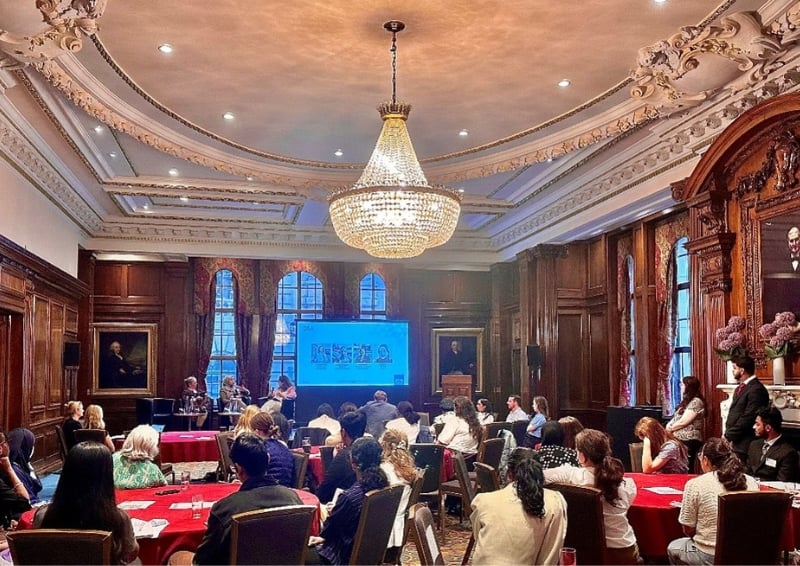
Earlier this year, the ICE Early Careers Network (ECNet) in London brought together engineers, researchers, and industry leaders to explore equitable safety, inclusive design and engineering cultures.
Held in collaboration with the ICE Fairness, Inclusion and Respect (FIR) Committee and David Porter’s Future Leaders, the discussions didn’t centre on whether inclusion matters, but instead on something more challenging: how we move from aspiration to action.
Moving beyond the ‘average’ user
Engineering has historically been designed around assumptions of an ‘average’ user. Yet real communities are far more diverse.
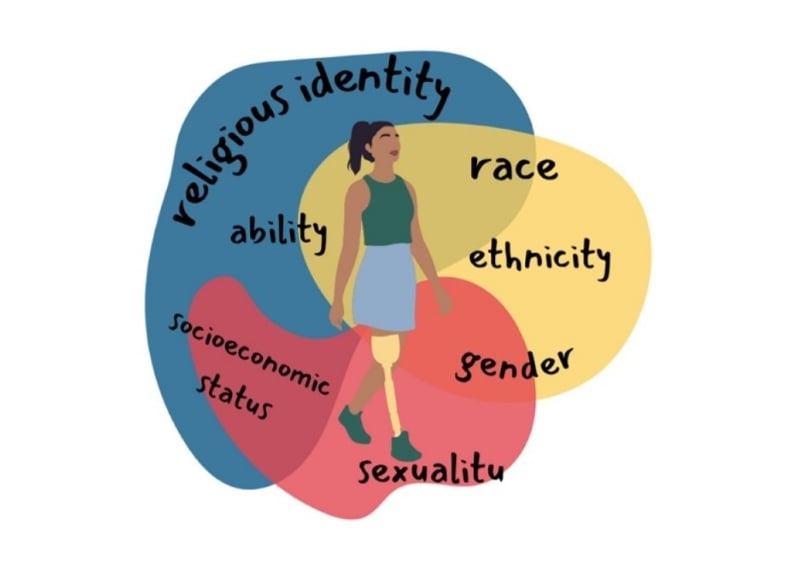
People’s experiences of infrastructure are shaped by factors such as age, disability, neurodiversity, caring responsibilities, culture, gender and socioeconomic background.
An intersectional perspective acknowledges that these factors don’t exist in isolation and can overlap in ways that affect how people interact with infrastructure.
Overlooking this results in consequences ranging from inconvenience and exclusion to genuine safety concerns.
The implications can be seen in everyday design and communication.
Around 10% of the UK population is believed to be dyslexic, while colour blindness affects approximately one in 12 men and one in 200 women.
Risk assessments that are difficult to process, or safety information conveyed through red and green alone, may therefore create avoidable barriers and risks.
Recognising and responding to these needs is an essential part of designing for equitable safety.
Rather than asking whether infrastructure is technically compliant, this challenges us to ask deeper questions:
- Who benefits?
- Who carries risk?
- Whose experience has been considered?
- Whose experience may have been unintentionally overlooked?
These questions aren’t only relevant to transport systems, public spaces and buildings. They apply equally to engineering teams, project processes and decision-making structures.
Better questions lead to better outcomes
Many of the questions raised in the room highlighted the complexity of delivering genuinely inclusive infrastructure.
They explored:
- how public consultation can better reach underrepresented communities;
- how engineers can challenge established power structures;
- how organisations can incorporate intersectional thinking; and
- how lessons from previous design decisions can be better captured and applied.
Delivering infrastructure that serves diverse communities requires curiosity, humility and a willingness to challenge assumptions.
It requires engineers to engage with lived experiences that may differ significantly from their own.
It also requires creating environments where people feel able to speak up, challenge decisions and contribute perspectives that may otherwise be missed.
Often, the most important question is not "have we consulted?" but "who is not currently in the room?"
What this looks like in practice
The main challenge is not a lack of intent, but translating it into consistent action when cost, programme, scope and risk compete for attention.
Practical tools and project examples can help teams make inclusion part of everyday decision-making rather than a late-stage check.
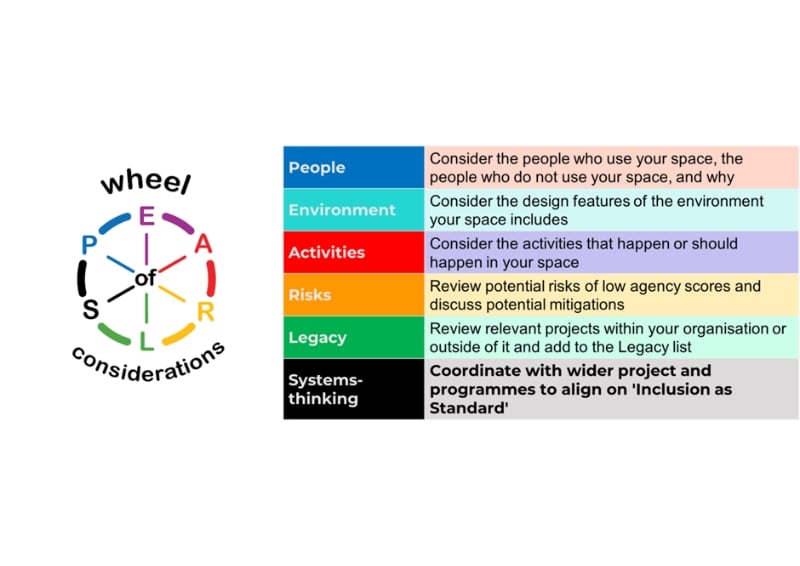
One practical approach is the Wheel of Considerations, which tests a design through three connected lenses:
- people and their diversity
- environmental constraints and requirements
- the activities people need to undertake
Used alongside the PEARLS (standing for people, environment, activities, risks, legacy, systems thinking) approach, it can help teams record assumptions, justify risk mitigations, review people’s actual experiences and share improvements beyond a single project.
Inclusion then becomes a documented design process rather than a late-stage check.
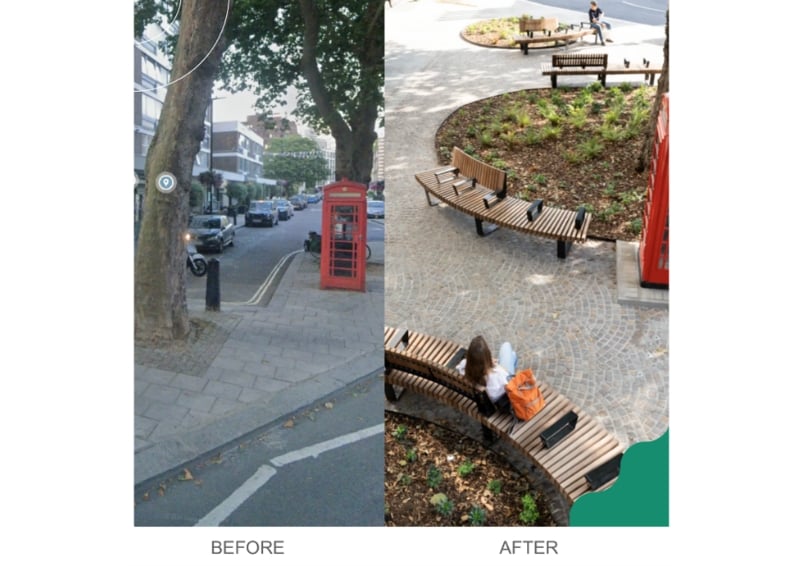
Public-realm projects such as Westminster City Council’s Connaught Village Green show how consultation can help create spaces that strengthen local identity while serving practical community needs.
Working with the Church Commissioners, the council helped transform a road junction into a public space. They introduced wider footways, improved crossings, seating and planting, providing places to meet and rest alongside easier pedestrian access.
Inclusion doesn’t always require an elaborate intervention. Still, accessibility and sustainability need to be treated as core design criteria, even where this means challenging established preferences on aesthetics, cost or performance.
Another practical principle is to design for the edges: considering the needs of people who may face the greatest barriers can lead to better outcomes for everyone.
Step-free access, for example, is essential for many wheelchair users, while also making journeys easier for people using pushchairs, carrying luggage or recovering from an injury.
Designing for a wider range of needs from the outset can therefore create more inclusive and intuitive solutions without treating accessibility as a separate requirement.
The role of professional institutions
Professional institutions have an important role to play in this journey.
Organisations such as the ICE can bring together practitioners, researchers, policymakers, clients and communities who might not otherwise share the same conversation.
This enables discussions to move beyond individual projects and towards broader questions about how the profession evolves.
Professional institutions can also provide a platform for emerging ideas, support the development of guidance and standards, and help translate research into practice.
Read the ICE’s paper on inclusive infrastructure
From aspiration to action
The encouraging message from the event wasn’t that the profession has solved these challenges. It clearly hasn’t.
But more engineers are asking better questions.
Progress will come from thousands of everyday decisions: who is consulted, whose voice is heard, what assumptions are challenged, how risk is understood and how success is defined.
The challenge now isn’t building awareness. The challenge is embedding these principles into the everyday decisions that shape our projects, organisations and profession.
Only then will we truly move from aspiration to action.


You may also be interested in

- Type
- Infrastructure blog
How New Zealand achieved cross-party agreement on its infrastructure plan
Political parties will not agree on projects, so it's best to focus on wider cross-cutting issues.

- Type
- News
New ICE president: 'social mobility doesn't end when someone enters the workplace'
At her inaugural address, Julie Wood told members that better connected infrastructure is the key to improving outcomes for people and nature.

- Type
- ICE Community blog
The tap on the shoulder that made me ICE president
When David Porter first joined the institution as a graduate, he didn’t expect to lead it one day.