





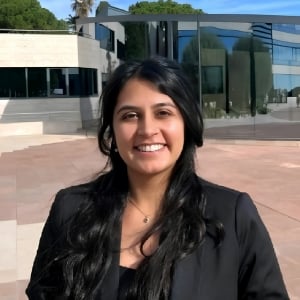
Anam Balbolia
Programme manager, Westminster City Council
Expertise
Project ManagementLocation
LondonMy highlights
Becoming a chartered principal engineer aged 28
Being on the WES Top 50 Women in Engineering 2025 list
Becoming one of the IESE Future Female Leaders for 2025
A day in my life
As a programme manager, I look after different schemes for Westminster City Council, each having a specific set of aims and dedicated funding.
Managing stakeholders and their expectations is part of my brief.
Stakeholders can be members of the public, private land developers or government figures, which is varied and may require different information or engagement levels.
I ensure I tap into the right people to provide strategic technical, legal or financial oversight, ensuring due process, including health and safety, is followed.
I also call on innovation and efficiency when developing new programmes of work to ensure the best use of public funding for delivery, procurement and constructability.
Since becoming professionally qualified, I have received industry accolades and obtained more ownership of the direction of programmes of work.
It has been a transformational experience, especially with regards to recognition and visibility across the industry.
What inspired you to become a civil engineer?
My father is a civil engineer and has been a life-long inspiration.
His rigour and attention to detail are qualities that I have always looked up to and share.
We asked Anam…
I would recommend a career in civil or infrastructure engineering because...
It's so broad that you're guaranteed not to get bored.
It's also multi-disciplinary, so you can choose to become an expert in a niche topic or retain a broader outlook for well-rounded projects.
Complete this phrase: I’m a civil engineer, but I’m also …
I’m also a friend and partner, an archer and traveller.
Name one civil or infrastructure engineering myth you'd like to bust.
That civil engineering is unglamorous and boring.
It's a prestigious and creative field to work in.
How does your role contribute to addressing climate change?
I work on public infrastructure projects where there's a lot of scrutiny on achieving the best possible outcomes in terms of net zero carbon emissions – even when considering value for money.
I review designs and appraise their carbon cost at the beginning. I then track it through scheme development and report on final values at completion.
This enables good governance of performance against local and national targets.
How does your role contribute to making the industry more diverse and inclusive?
Part of my work in the last few years has been on improving women's safety on the highway network.
This has been through site audits, especially at night, with expert recommendations provided for implementing change.
I have also written guidance on new design standards aimed at positively impacting diversity and inclusion as well as accessibility and carbon reduction within the industry.
What role does digital technology play in your job?
You need technology to do engineering in this age.
In my role, I touch a wide range of software (e.g. Auto CAD, geographic information systems (GIS), bespoke project management, etc).
It's very helpful to have dedicated tools to undertake different tasks. However, getting up to speed with all the relevant ones takes time and skill.
What motivated you to become professionally qualified?
Since university, I was encouraged to consider working towards chartership, especially with the ICE as the golden standard.
Hence, company support towards professional qualification was a key criterion when I picked a company to work for post-graduation.
There, I signed up to a training agreement within months of joining and had regular catch ups with my mentor.
Having other young engineers to work alongside really helped boost my enthusiasm for submitting regular reports until I was fully signed off.
I still remember the pride I felt when I was recommended for the review and read my sponsors’ statements.
How did the ICE and your employer support you to become professionally qualified?
I'm fortunate to have had the support of more senior, dedicated engineers along my path to professional qualification.
They spent time and effort reviewing my work, providing advice and generally acting as sounding boards.
I learnt so much about my own resilience and ability to grow from doing mock interviews, which could be quite the grilling.
How has being a member helped your career?
The ICE is a powerhouse of engineering for fostering connections within and outside each industry.
Whether coming across people and striking up a conversation at the Members Resources Hub or attending a formal event, I always come out energised from engaging with the ICE.
In terms of career, the ICE has helped me shape what I wanted my career to look like while remaining flexible enough to take up opportunities along the way.
Do you have any personal causes?
I thoroughly enjoy volunteering and have been involved in different causes over the last 15 years.
You can find me trying to link engineering to social causes as much as possible and dedicating time to give back to communities.
Anam's career path
- Maths, physics and economics at A-levels in Mauritius
- Four-year civil engineering masters degree with a year abroad at Imperial College London, UK (and TU Delft, Netherlands)
- Graduate to engineer (and hub manager) at Metis Consultants Ltd (SME)
- Senior to principal engineer at WSP Ltd (multinational company)
- Programme manager at Westminster City Council (local government)
Major projects
- Greater Cambridge Partnership Women Safety Review
- London Borough of Redbridge Active Travel Routes
- Department for Transport Local Transport Infrastructure Carbon Benchmarking Tool





Related Content

- Type
- News
Nominations open for ICE president
Candidates who meet the requirements are invited to stand to represent the institution as a future president of the ICE.

- Type
- ICE Community blog
What's the foundation of flood resilience? Information
ICE President David Porter explains why being informed about flood risk is so important for the public and civil and infrastructure engineers.

- Type
- Awards and competitions
It’s electrifying! South Wales Metro track transformation bags top award
The electrification of the Core Valley Lines impressed the judges at the 2026 British Construction and Infrastructure Awards.