


ICE Knowledge Hub
Access the very latest and best CPD content to help you grow your knowledge and skills.
Sign in now

To cultivate an environment where accidents are genuinely rare, we must consider human psychology, explains Dr A Y Li.
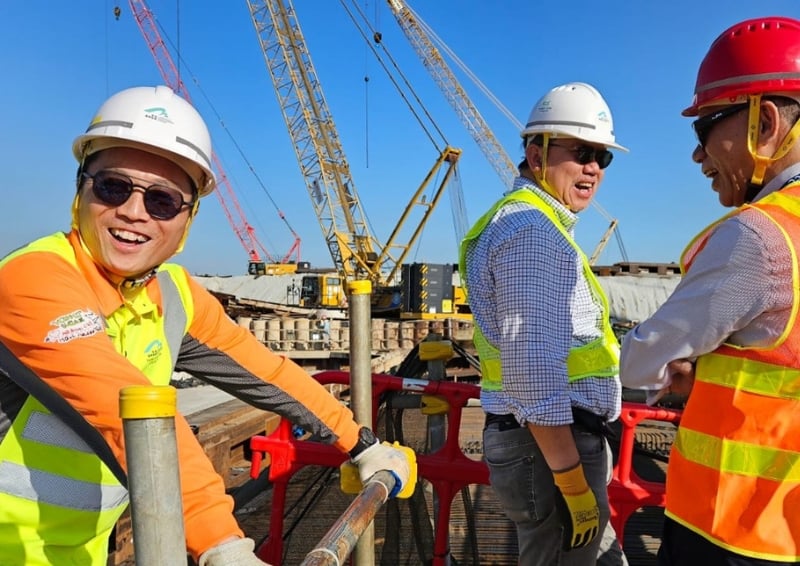
In the high-risk, ever-changing construction sector, silence is often a rational survival strategy.
A worker will not report a frayed sling or an unstable scaffold if they fear retribution or feel it would put their job at risk.
It’s why, despite decades spent perfecting safety procedures and protocols, global incident rates have plateaued.
The solution cannot be found in a new safety manual.
To cultivate an environment where accidents are genuinely rare, we must apply the lens of human factors.
Without trust, critical information on where dangers lie can be missed.
But when workers witness that speaking up results in tangible improvements – whether that’s a repaired walkway or better site facilities – their motivation shifts from obligation to ownership. They feel personally invested in safety.
It stops being a mandated checklist and becomes a value that the whole team shares.
This is a key element of the Agile Collaborative Safety Culture (ACSC) Program, which is working with construction sites to drive a shift from a culture of policing to one of commitment.
The program’s three core pillars – trust, respect and care – are embedded in everything it does.
These values are nurtured through tangible action and rigorous structures, such as:
Our philosophy is: "We want the information, not the name."
Workers are empowered to say "no" when safety is at stake, separating the technical problem from the person involved.
Leadership is a visible act.
We facilitate daily reviews where frontline workers engage directly with the full management spectrum, including engineers, safety officers, and site managers.
The ACSC Program has been working with some of Hong Kong’s most complex mega-projects – ranging from live railway tunnels to the HK$141.5 billion (GBP£13.37 billion) expansion of Hong Kong International Airport.
Over the past 10 years or so (2015-2024, to be precise), sites implementing the program recorded an accident frequency rate of 4.1. The industry average, according to Hong Kong’s Labour Department, is 29.6.
Performance continues to improve. In 2024, the AFR at sites following the program dropped to 0.3 per 1,000 workers – compared to a 25.0 industry average for the year.
Isolated periods of low incident rates can be deceptive, often masking underlying risks that cause rates to spike in later months.
Such volatility is the hallmark of a fragile system. A true cultural shift is defined by consistency.
In high-hazard engineering, low volatility is a vital metric of success.
It proves that safety performance remains resilient and consistent under intense operational pressure, rather than fluctuating alongside production cycles.
Traditional, authoritative safety management often fails due to human biology.
When a worker feels threatened by a supervisor, the brain's limbic system triggers our fight or flight response, compromising executive function.
Under high stress, the ability to process complex information and recognise hazards is diminished, making the worker more vulnerable to error.
The ACSC Program considers these human factors to nurture psychological safety in the team – creating an environment where workers feel safe being vulnerable, admitting to mistakes and challenging the status quo.
By using anonymous and no-blame reporting, emotion (i.e. fear of repercussions) is removed from the process, allowing critical information to get where it needs to go.
Furthermore, direct access to leaders reinforces that psychological safety is a priority at the highest levels of the project.
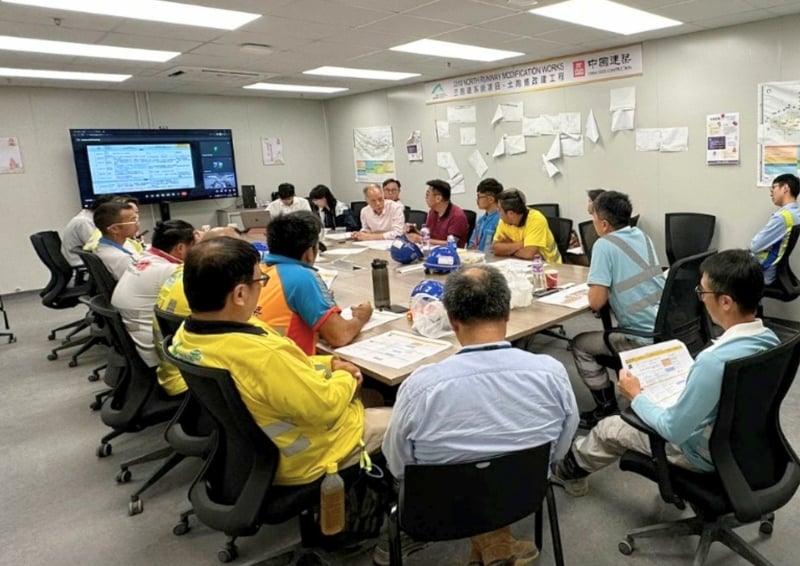
To make safety a highly reliable practice, we move beyond gut feelings to a data-driven discipline.
The program uses machine-learning analysis from over 1,000 distinct data points, enabling the system to identify subtle dips in site morale or reporting and trigger proactive interventions before they manifest as incidents.
By quantifying the ‘intangibles’, we provide a rigorous, evidence-based foundation for cultural interventions, moving beyond the industry’s traditional reliance on instinct.
To spread this methodology, the industry must treat culture and trust as measurable elements managed with the same rigour as traditional KPIs.
This can often require structural and contractual action:
When institutions like the ICE, the Hong Kong Institution of Engineers, the Construction Industry Council, and Hong Kong’s Development Bureau align to champion these practices, trust, respect and care become the industry standard.
High-risk sectors like aviation, healthcare, and nuclear power learned decades ago that technical excellence alone cannot prevent disasters.
Human behaviour dictates success or failure.
The challenge for construction is translating these concepts into our changeable, highly subcontracted environment.
Our work on mega-projects proves this translation is possible.
By combining contractual frameworks like NEC with anonymous reporting and no-blame leadership, we’re successfully adapting these global, cross-sector lessons into daily construction practice.
Building a high-trust environment amid the immense operational pressures of a major construction site is not a ‘soft’ exercise in office culture. It’s a sophisticated engineering of human behavior.
Ultimately, safety is the definitive indicator of organisational health.
We possess the engineering mastery to design and build the world's most complex structures. The next leap in industry performance demands that we invest in the people who build them with the same rigour we apply to technical specifications.
When the human infrastructure – rooted in psychological safety and mutual respect – is as robust as steel and concrete, world-class performance is no longer an aspiration, it’s an inevitable consequence.

ICE President David Porter explains why being informed about flood risk is so important for the public and civil and infrastructure engineers.

The electrification of the Core Valley Lines impressed the judges at the 2026 British Construction and Infrastructure Awards.

Good decisions made at speed can lead the industry down unintended paths, writes Steven Yule, ICE country representative for the UAE.