





With the help of its dedicated volunteers, the institution also supported the development of thousands of early career engineers.
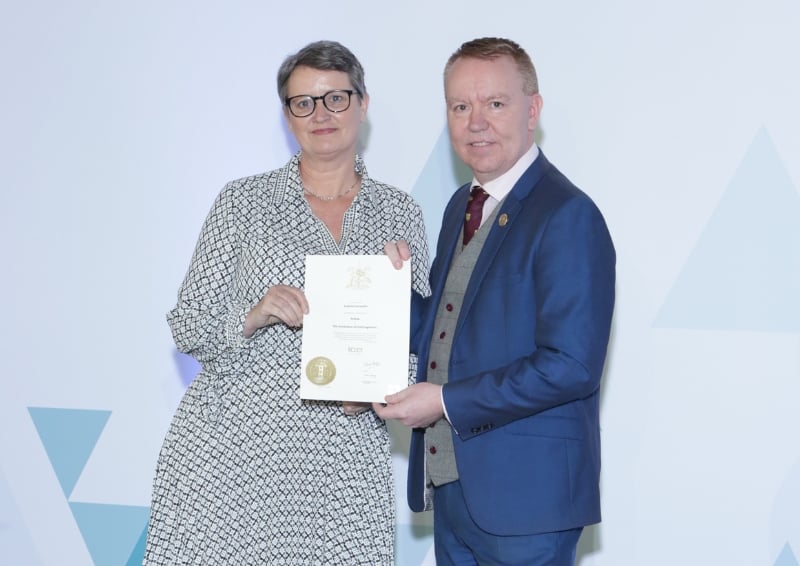
Engineers working within the infrastructure sector can now make the ICE their professional home regardless of their career level.
Originally introduced in 2023, the infrastructure engineer qualification recognises the broad spectrum of expertise that makes up the industry.
Aside from civil engineering, this includes specialisms such as digital, sustainability, mechanical and chemical.
Initially the qualification was only available at the Chartered Engineer (CEng) level. But the ICE’s latest annual report noted that in 2025, the ICE launched the Incorporated Engineer (IEng) and Engineering Technician (EngTech) options, completing the suite.
This move makes the qualification available to people at different stages in their career.
“The launch of the full pathway of the infrastructure engineer designation marks a significant step in ensuring our institution is truly the home of infrastructure,” said David Porter, ICE President.
“This creates opportunities for engineers from all disciplines and interests who work in infrastructure to find their place in the ICE, just as I found mine many years ago.”
Jananie Balapitathees, the first Incorporated Infrastructure Engineer, discusses the industry's need to adapt to emerging technologies.
Only possible with the support of volunteers
“Volunteering remains one of the most powerful ways in which members shape the future of the profession,” said Dr Janet Young, ICE director general, in the report.
It is the “vital” commitment of volunteers that made the expansion of the infrastructure engineer qualification possible, she noted.
Nurturing early careers
Dr Young highlighted the contributions of professional reviewers and end-point assessors, who ensure candidates meet the requirements to obtain their qualifications.
Their support helps to safeguard “the excellence and credibility of our profession”, she said.
This extended to all qualifications – civil and infrastructure – as the institution partnered with employers and educators to support the engineers of the future.
Around 500 ICE-approved employer training schemes supported some 12,000 early career professionals.
Meanwhile, about 23,000 graduates and apprentices benefitted from the institution’s collaboration with universities and colleges, which sought to improve their work-readiness.
Civil engineering apprenticeships also continued to expand, with around 4,500 in place across the UK.
The ICE supports this growth through its role as an End-Point Assessment Organisation (EPAO) in England, and by offering guidance to apprentices UK-wide.
Inspiring schoolchildren to pursue engineering

The institution’s flagship ICE CityZen programme, designed to show students aged 14 to 18 what a career in civil engineering has in store, had a record-breaking year.
For the first time ever, all-female teams took home the gold, silver and bronze prizes in the ICE CityZen Award for 16- to 18-year-olds.
This competition tests the students’ creativity by asking them to pitch an infrastructure project that would improve their local community.
The winning team, The Deltas, proposed converting a local disused mine into a geothermal power plant to support the transition to renewables and cut energy costs.
The teams were guided by CityZen mentors – volunteer ICE STEM Ambassadors who shared insights from their real-life experience of working in infrastructure.
“Our STEM ambassadors and CityZen mentors have had a profound impact on young people’s understanding of what engineering can achieve," said Dr Young.
Support at the other end of the career spectrum: Fellowship
The institution’s work to support more women into the ICE’s highest grade of membership, Fellowship, continued in 2025.
The ICE Connects: Women in Fellowship initiative has been offering mentoring, networking and tailored guidance to boost confidence and application success.
The network and its volunteers have almost doubled the amount of female ICE Fellows since the initiative launched in 2021, from 5.25% of all Fellows to 9%.
“Increasing representation of women in leadership roles is essential for a profession that reflects the society it serves by harnessing diverse perspectives to solve complex challenges,” said Michele Dix CBE, chair of the ICE Connects: Women in Fellowship focus group.
To explore more ways volunteers shaped the ICE’s work in 2025, read the full annual report.

Sustainable Development Goals:
You may also be interested in

- Type
- Webinar
Careers talks
Aimed at students, this series of seven webinars which runs until May 2027 will enable you to learn about professional life from recent graduates from across the industry.

- Type
- News
ICE Wales Cymru publishes manifesto amid ‘unprecedented and deeply concerning’ flood risks
Flood risk management was a top concern in the new Infrastructure in Wales 2026-2031: prosperity, growth and jobs report.

- Type
- News
RAEng names 4 leading ICE members as Fellows
The Royal Academy of Engineering (RAEng) has announced 75 individuals who are making outstanding contributions to the profession.