

Year
2025Duration
2 yearsCost
£2.2mLocation
United KingdomProject achievements
Solved the problem
Restored a vital transport link
Environment benefitted
Achieved almost zero waste from demolition
Conservation
Reused stone from the original structure to retain its heritage
Restoring a vital transport link while maintaining its historic character
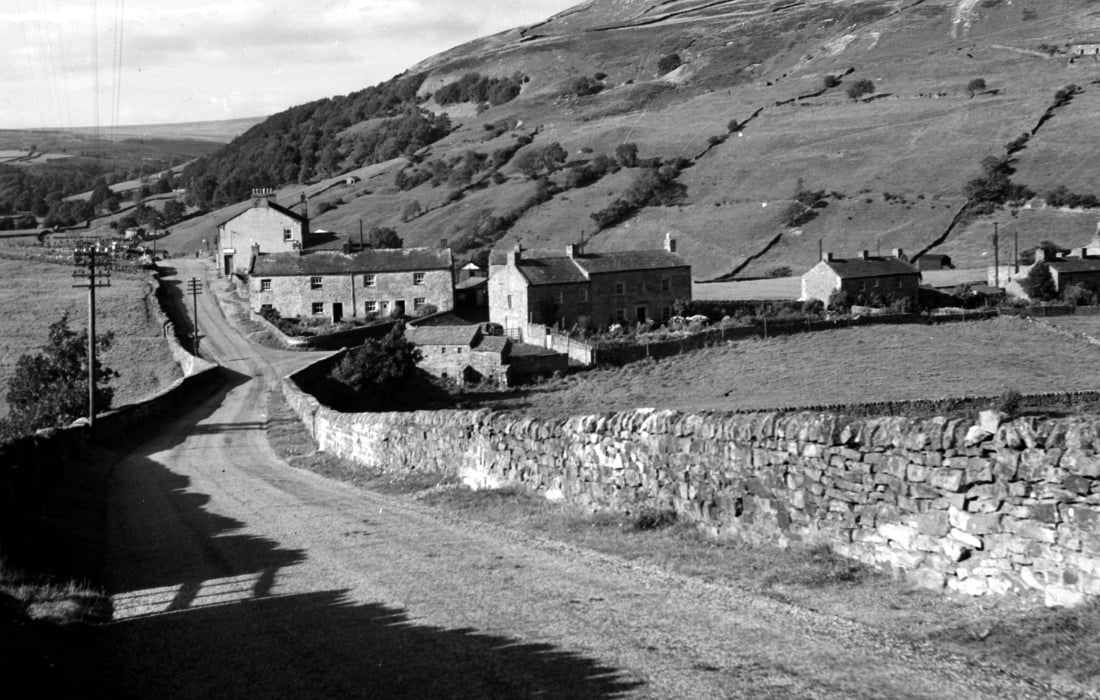
Fore Gill Bridge represents the challenges facing much of the UK’s ageing transport infrastructure.
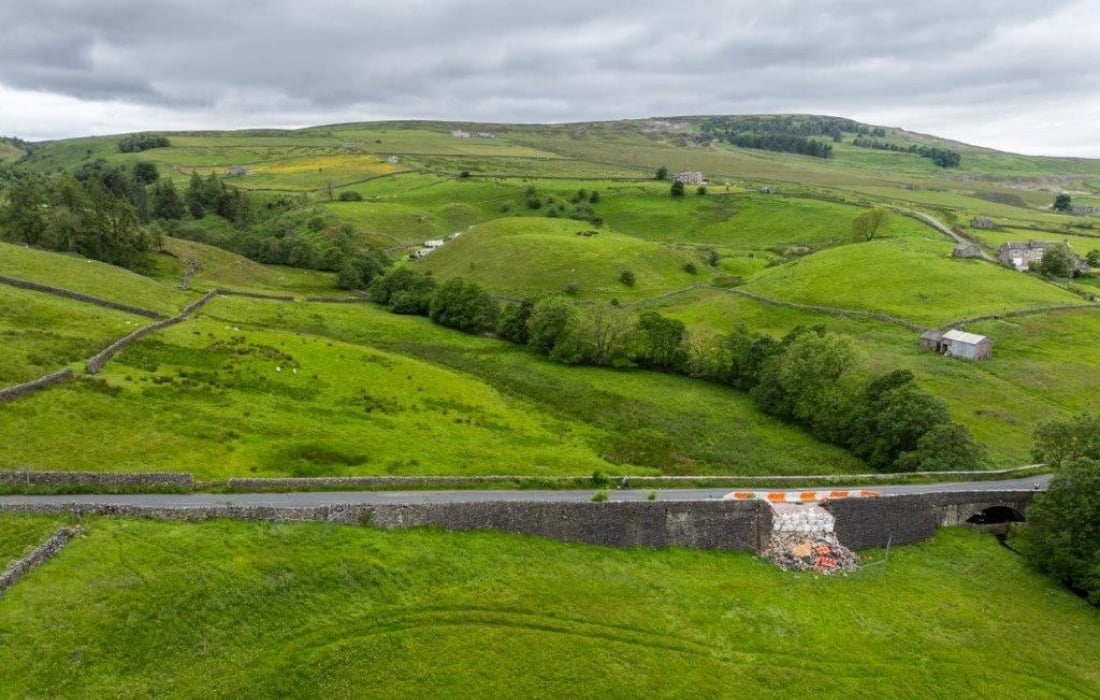
The bridge, constructed circa 1770 as part of mining turnpike roads, remains vital to rural communities in Arkengarthdale yet must accommodate evolving traffic demands and increasing climate pressures.
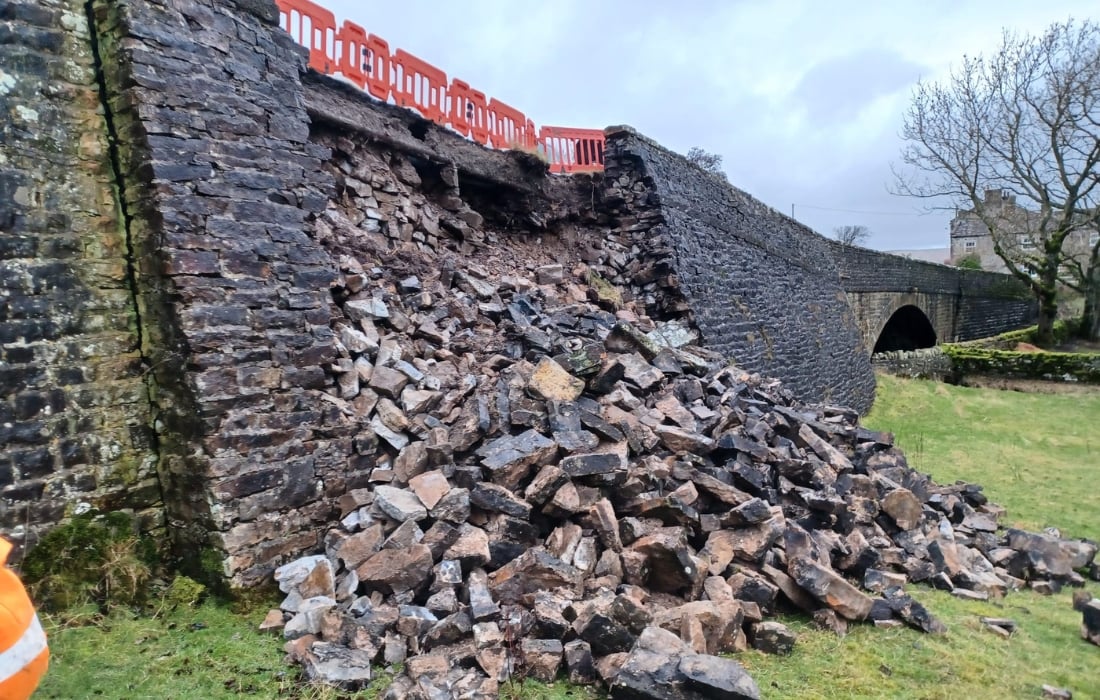
Indeed, heavy rainfall during Storm Gerrit in December 2023 led to the partial collapse of the retaining wall approaching the bridge which revealed a history of undocumented alterations dating back to the early 20th century.
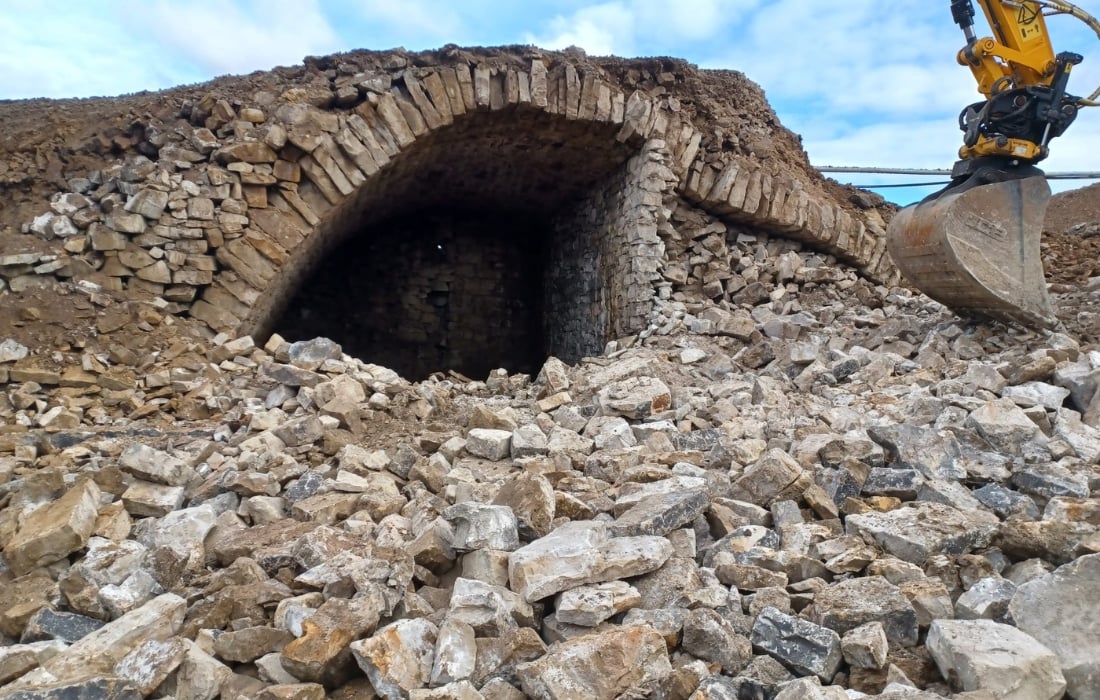
The alterations resulted in the concealment of three 9m span masonry arches hidden behind the retaining walls which were not able to be inspected or maintained, requiring a full rebuild of the structure.
A small team from North Yorkshire Council worked alongside contractors to investigate the collapse, develop a temporary bypass and deliver a replacement bridge that honoured historical heritage.
Did you know …
-
Three hidden 9m-span masonry arches were uncovered during demolition in 2024.
-
The new bridge reused 820 tonnes of stone from the original structure, combining 18th-century materials with modern engineering.
-
The project achieved almost zero waste from demolition, with 1,500 tonnes of surplus stone crushed and reused as fill within the new soil-reinforced retaining walls.
How the work was done
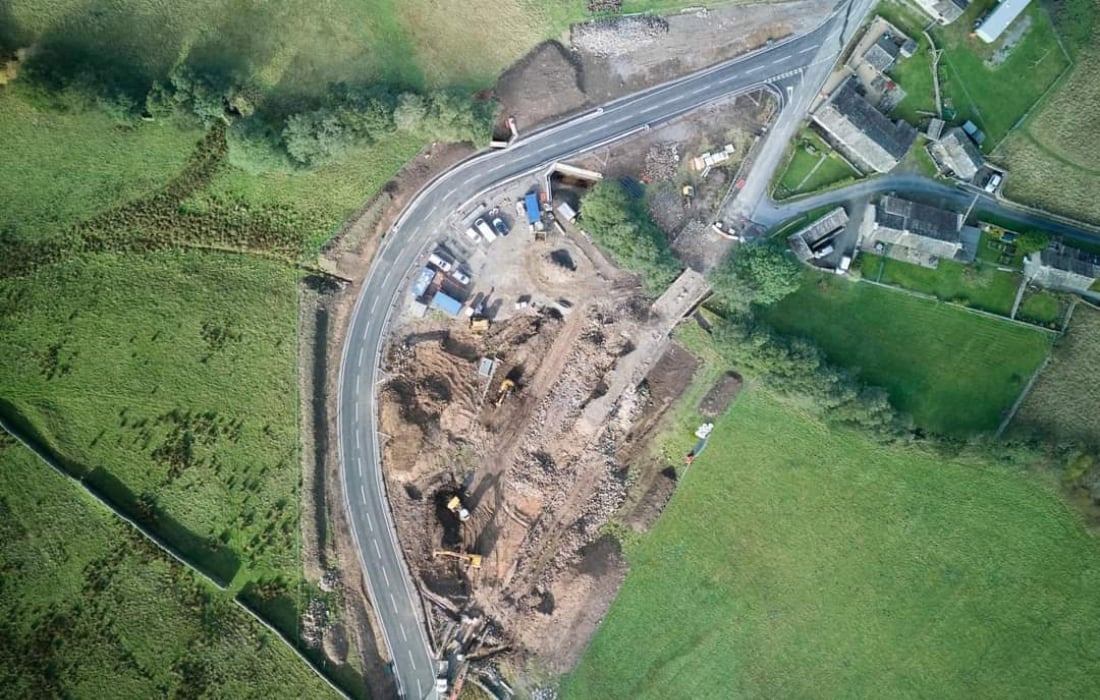
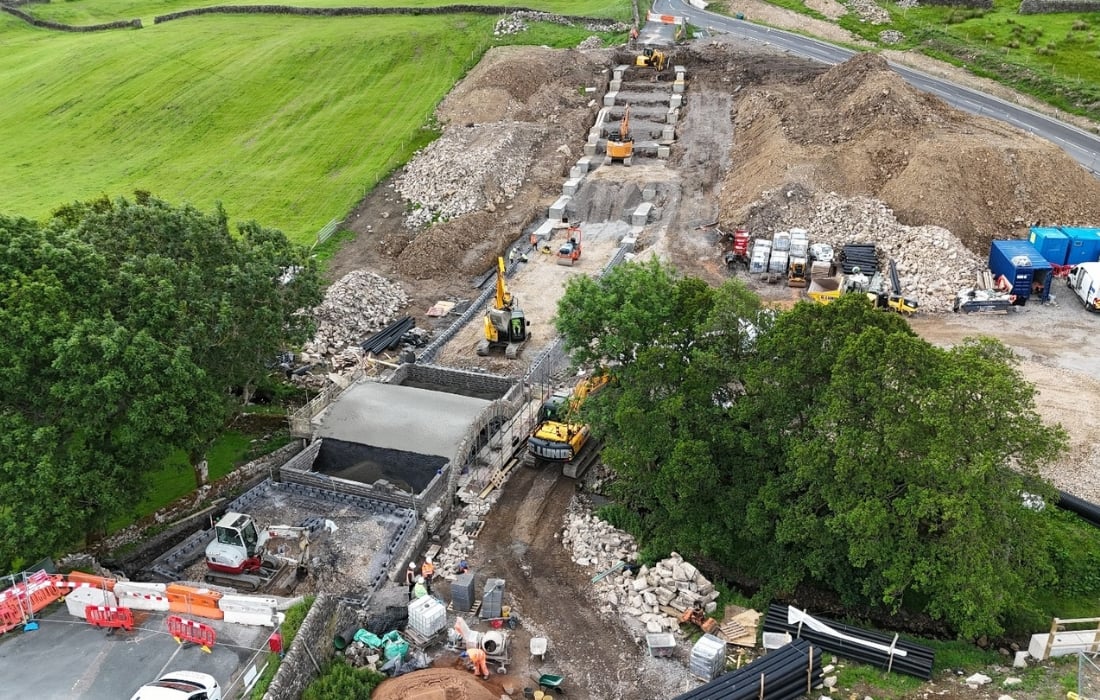
To maintain access while a permanent solution was developed, engineers designed and constructed a temporary bypass through neighbouring fields.
Work began in July 2024 on the 200m-long route, which included a temporary 2m-span culvert over the watercourse. The bypass opened to traffic in September 2024.
The project required agreement from local landowners and careful management of environmental constraints, including protected bat habitats.
With traffic diverted, the damaged bridge was demolished during October and November 2024.
As the structure was dismantled, engineers revealed three previously hidden masonry arches. Following demolition, the contractor demobilised from site in November 2024.
Engineers then developed the design for the replacement bridge, with design work continuing until March 2025 before construction began the following month.
Incorporating the original stone
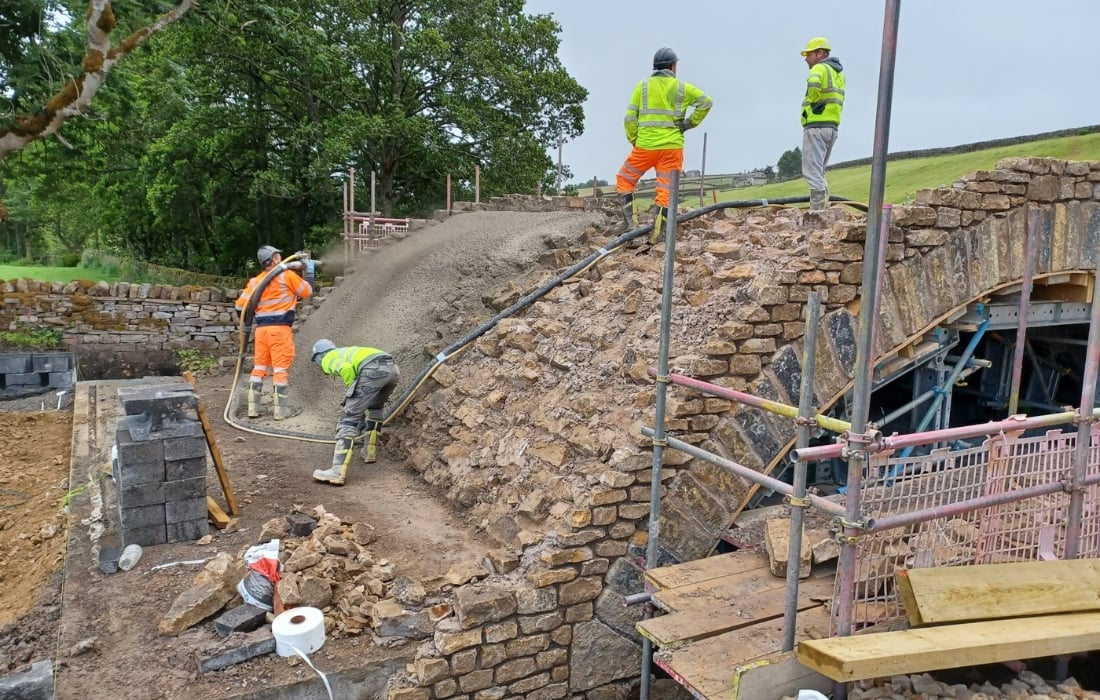
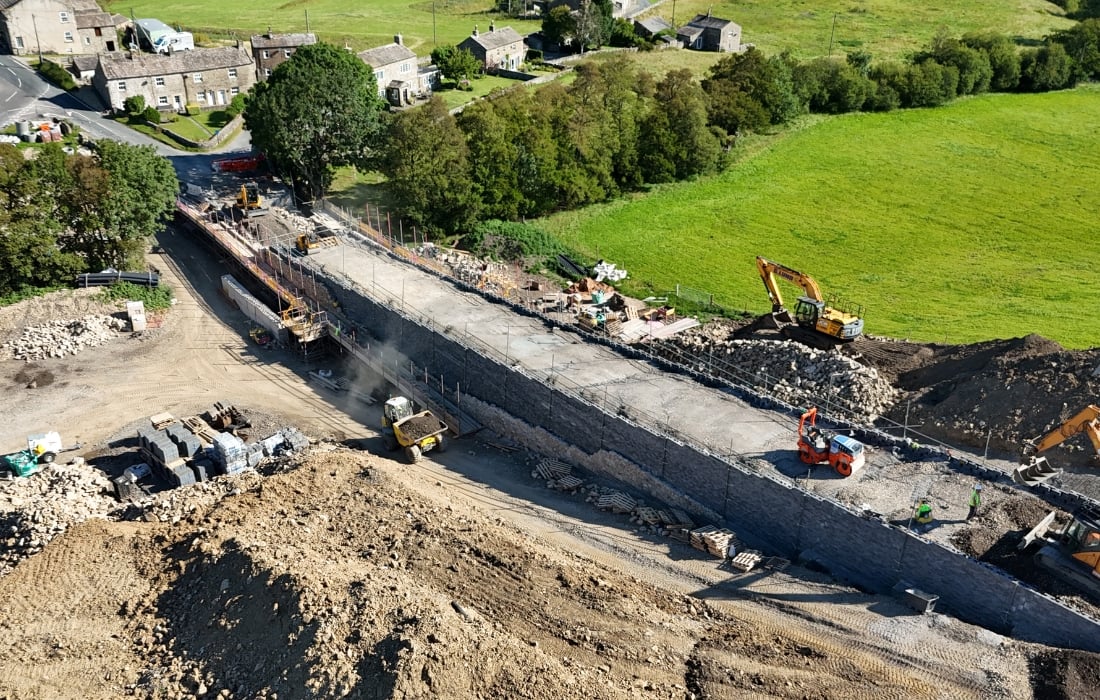
The replacement structure was designed with a widened and strengthened bridge, combining a traditional 8.5m span masonry arch with 5m high, back to back soil‑reinforced retaining walls.
During the construction phase of the rebuild, this design approach enabled maximum re-use of stone recovered from the original structure.
Re-use encompassed all facing stone for the reinforced soil walls, the full parapet complete with the original coping stones, and original masonry arch stones, including the wedge-shaped voussoirs that form the arch.
In total, 820 tonnes of stone was salvaged and reincorporated into the works.
Circularity helped save carbon
This circular‑construction approach delivered a carbon saving of approximately 140 tCO₂e compared with sourcing and importing like‑for‑like new materials, while preserving the beloved aesthetic character of the bridge.
The scheme achieved zero waste of material from demolition by crushing surplus stone for re-use as fill material elsewhere on the project.
In total, 1,500 tonnes of material was processed and reincorporated into the reinforced soil walls. This reduced vehicle movement and saved 250 tCO₂e when compared with importing equivalent aggregate material.
The entire crushing operation was completed onsite within five days, requiring only minimal plant use and generating a relatively small carbon cost of approximately 2 tCO₂e.
The project’s strong focus on material re-use contributed to successful delivery within a £2.2 million budget while fully meeting the aesthetic requirements of the Yorkshire Dales conservation area.
Engagement with local communities confirmed their support for the scheme. Residents noted that the rebuilt bridge sits naturally within its landscape, retaining the character and sense of history that is so important to them.
The project demonstrates how traditional heritage sensitive masonry structures can be constructed at pace and how civil engineers can make a real difference to communities.
Engineering skills used in the project
- Structural engineering – assessing the damaged bridge and designing the replacement
- Highway engineering – designing the temporary bypass and maintaining access for road users
- Geotechnical engineering – assessing ground conditions and foundation design
- Heritage engineering – designing a traditional masonry arch bridge
- Construction management – planning demolition, temporary works and reconstruction activities
- Project management – coordinating the programme, budget and delivery team
- Environmental management – managing protected species, including bats, and minimising impacts on the surrounding environment
- Stakeholder engagement – working with local communities, landowners, statutory bodies and other stakeholders
People who made it happen
- Client: North Yorkshire Council
- Engineers: Matthew Lewis Walker (lead engineer), James Walker (project manager), Christopher Walker (designer)
- Contractor: C R Reynolds Ltd
Learn more about the project
Webinar: Fore Gill Bridge rebuild - a sustainable approach to renewing ageing rural infrastructure