

Year
1472Duration
1220 to 1472Cost
UnknownLocation
United KingdomProject achievements
Connected communities
The cathedral welcomes communities from across the globe
Economy boosted
Its Gothic architecture and magnificent stained glass windows attract tourists to the city
Conservation
Repairs and restoration works have enabled the cathedral to survive hundreds of years
A medieval giant watching over the city of York
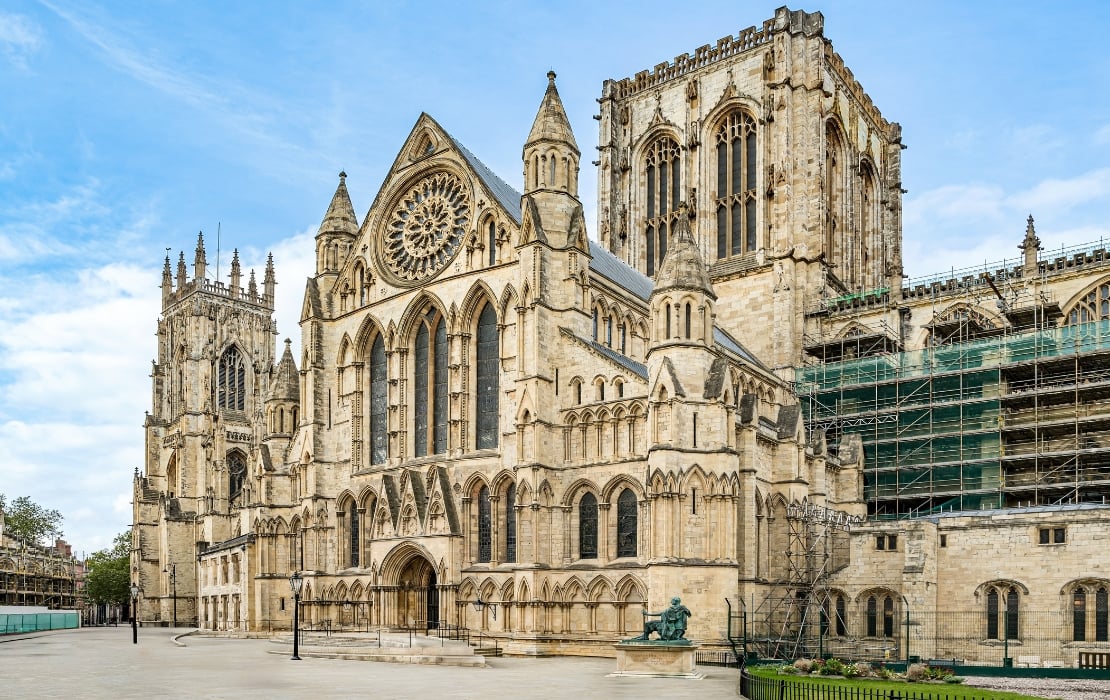
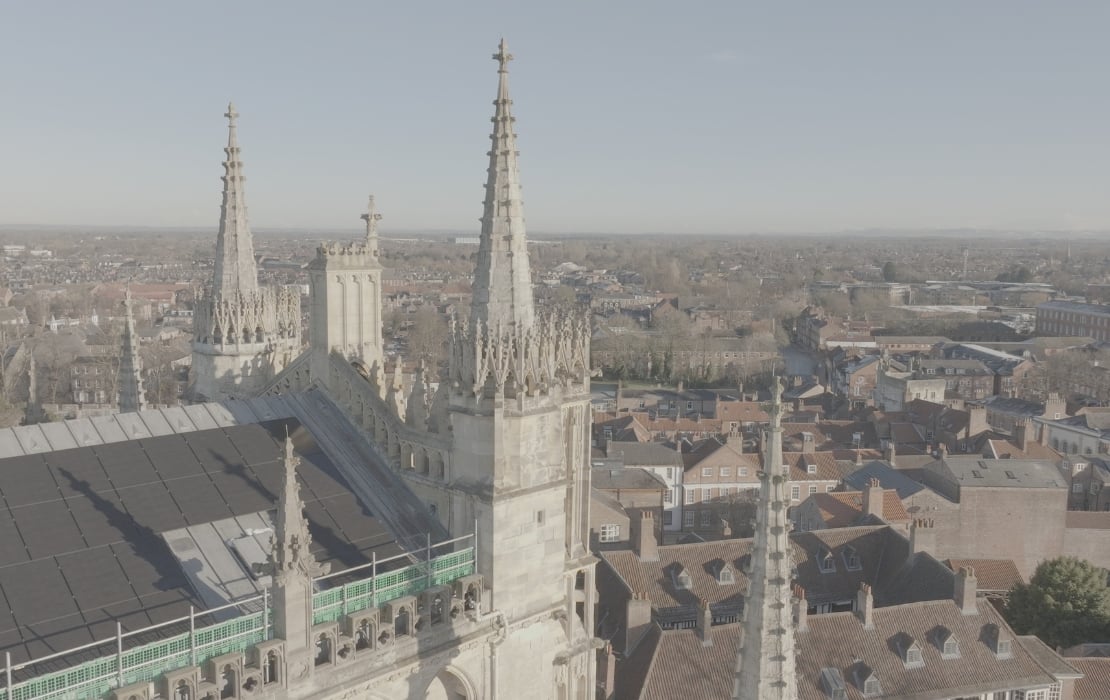
York Minster is a Gothic cathedral that towers over the city of York in north England. It's the seat of the archbishop of York, the second highest office of the Church of England.
Formally titled the Cathedral and Metropolitical Church of Saint Peter in York, the minster is a Grade I-listed building and a scheduled monument.
While most of the cathedral was built between 1220 and 1472, there are records of a church on this site from as early as 627. That first church was a wooden structure, built to baptise Edwin, King of Northumbria from 616 to 633.
Later iterations of the building were subject to invasions and destruction, including the Harrying of the North – a series of military campaigns led by William the Conqueror in the winter of 1069 to 1070.
Construction on the building you'd recognise today began in 1220, after the archbishop called for a Gothic cathedral for the city that could rival Canterbury's.
The structure has survived a number of fires, including a severe one in 1984 which is thought to have likely been caused by a lightning strike hitting a metal electrical box on the roof. A repair and restoration project was completed by 1988.
The cathedral is famous for retaining most of its medieval stained glass. The Great East Window is of particular renown. Depicting the Last Judgement, it consists of over 300 panels.
Did you know …
-
Celebrated glazier John Thornton was commissioned to design the Great East Window in 1405. He was paid £56 for his work – that's almost £60,000 in today’s money.
-
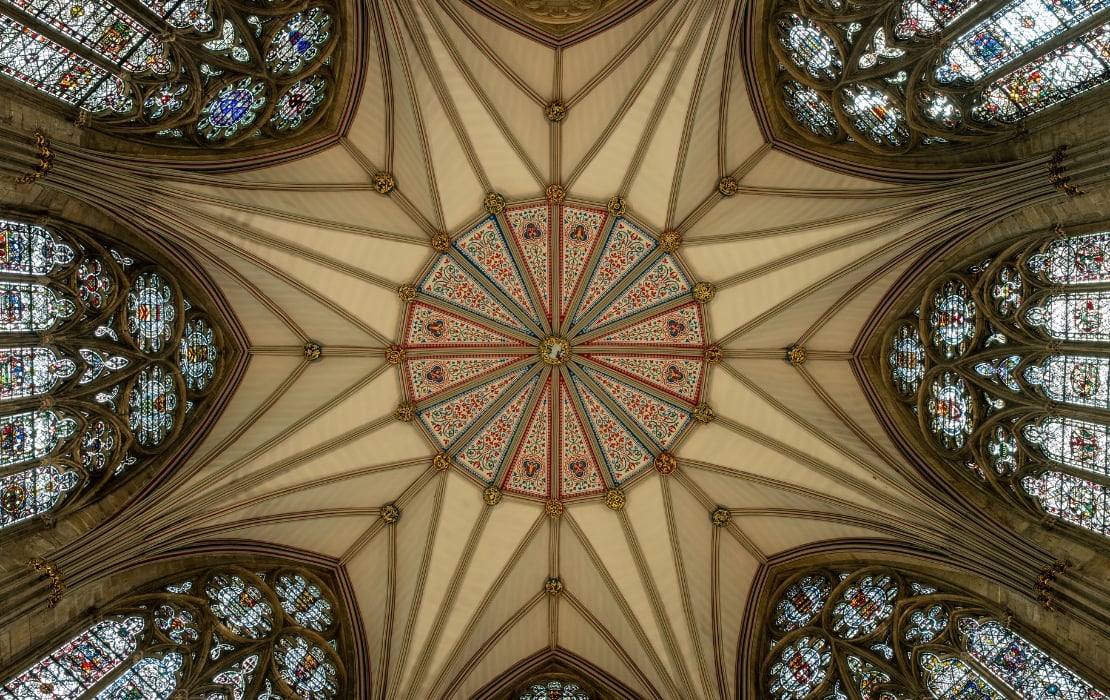
The cathedral’s chapter house hosts many Gothic sculptures above its canopies. They’re all human heads, and they each sport a unique expression, from angelic to grotesque!
-
The cathedral has a turret clock, but as locals noted around 1858 (with the arrival of the observatory at the York Museum and the transmission of Greenwich Mean Time through the railway), it's not very reliable...
Solar-powered
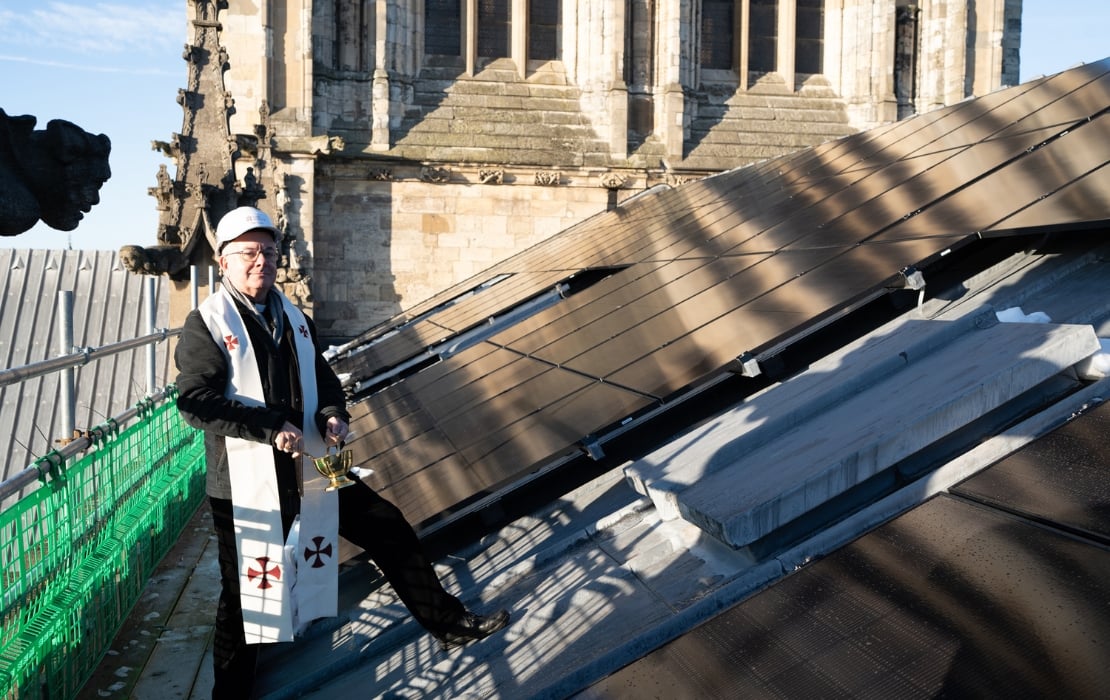
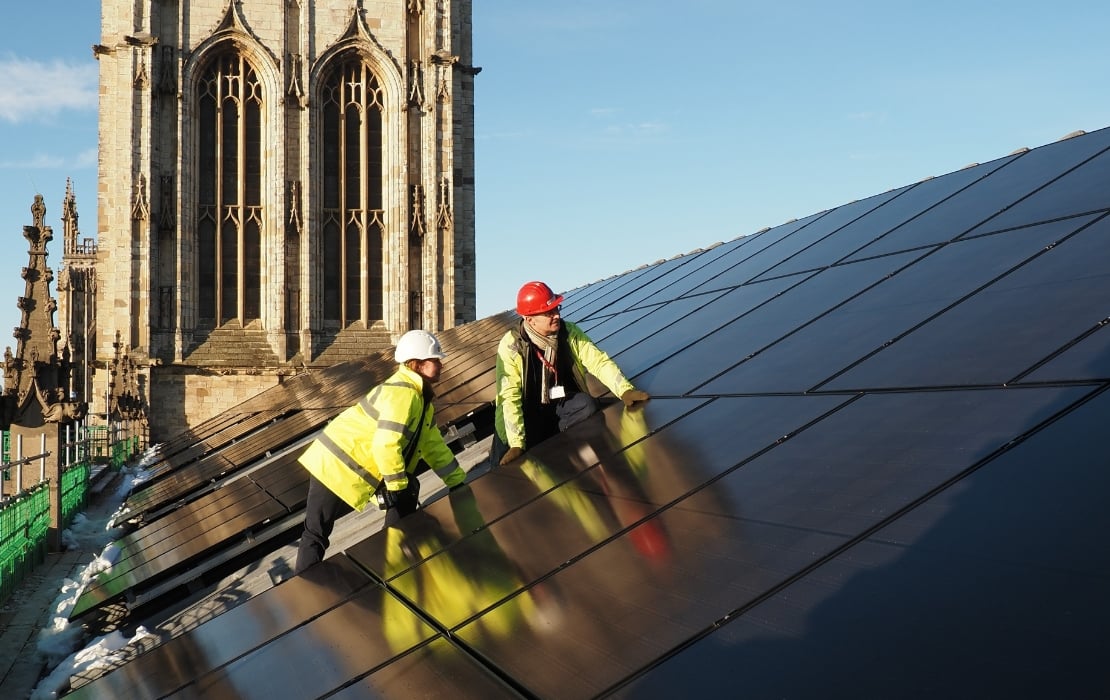
In 2025, the cathedral embarked on a project to power the medieval structure using solar energy.
A rooftop solar system was installed, consisting of 184 panels that generated over 42,000kWh of clean electricity within the first six months of operation.
That covered over 80% of the cathedral’s needs at peak demand and saved it nearly £20,000 in electricity costs. It also offset eight tonnes of CO2 emissions.
Fire safety was a priority for this project, especially given the minster’s long history of roof fires.
The system was designed to reduce electrical and fire risks, including a feature that automatically reduces high-voltage direct currents (DC) in panels to safe levels when the inverter or grid is shut down. This significantly reduces the risk of electrical shock, allowing emergency responders or maintenance teams to access the roof.
Another safety feature monitors for any unusually high heat levels in the system’s connectors, which can be an early sign of a fault. If a problem is spotted, it can help prevent an electrical arc from forming (a high-temperature electrical discharge that can pose a fire risk).
The system also includes a Firefighter Gateway, which allows the entire solar array to be shut down quickly, manually or automatically, in case of an emergency.
People who made it happen
- Archbishop Thomas of Bayeux
- Archbishop Roger of Pont l’Évêque
- Archbishop Walter de Grey
Solar power transformation:
- SolarEdge