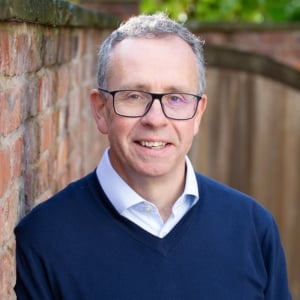


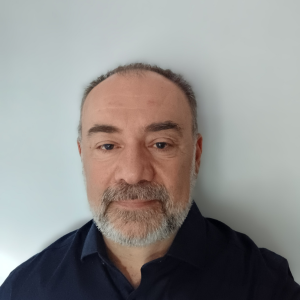
Antonis Palatianos
Senior associate project manager, Mott MacDonald
Expertise
Project Management, Water, Environmental ManagementLocation
North WestMy highlights
Leading the design assurance of the multi-million pound Oswestry water treatment project
Delivering two storm detention projects for United Utilities
Seeing my younger trainees and mentees achieve their professional qualifications
A day in my life
Although not the most athletic type, I try to squeeze in a 30-minute swim session as often as I can at the start of the day.
I then set off for one of the four different locations I can work from (two offices in Manchester, client’s office in Warrington or onsite). If there's no time to waste travelling, I work from home.
I have calls and face-to-face meetings with my team and the client, and usually block some time to work on actions. When onsite, I walk around to oversee any areas that require attention.
I stop work around 6pm and spend some time with my family, followed by volunteering work on ICE activities and for my role in the business as technical excellence lead.
Civil engineering is about changing the world by improving people's lives. Civil and infrastructure engineers need to be good at soft skills like communication, leading people and managing change.
What inspired you to become a civil engineer?
My curiosity to find out how the infrastructure around me works and my aspiration from a young age to improve the lives of people and protect our planet.
We asked Antonis…
I would recommend a career in civil or infrastructure engineering because...
It’s rewarding to see your efforts improve people’s lives.
You get to meet and connect with a lot of great, bright people and learn from them.
You develop (sometimes without even realising) important transferable skills such as communication and managing conflict and people.
Complete this phrase: I'm a civil or infrastructure engineer/technician, but I'm also...
I’m a proud dad, a mentor and music enthusiast. I haven’t managed to learn how to play music but I did some time as a radio DJ.
Name one civil or infrastructure engineering myth you'd like to bust.
You will need to be good at maths to work as a civil engineer.
I am living proof that this is not the case!
How does your role contribute to addressing climate change?
For most of my career I have worked on wastewater and water treatment works.
At their heart, these projects protect the environment by reducing pollution.
We can also minimise their own environmental impact by assessing the whole life carbon emissions of the products generated by the process, and reusing them for heat and power.
How does your role contribute to making the industry more diverse and inclusive?
Throughout my career I've had the pleasure of working with multi-ethnic and multi-cultural teams in six countries and two continents.
Working with a diverse team is something I actively seek. Everyone has an opinion and everyone’s requests are listened to and accommodated as far as possible.
What role does digital technology play in your job?
Controls and automation are crucial to all infrastructure projects I work on.
The modern tools available allow engineers to use their mobile phones to capture assets and transfer them to 3D models, enabling the creation of digital twins and digital programme rehearsals.
Virtual reality and augmented reality headsets allow us to engage with stakeholder and visualise infrastructure that's not been built yet.
AI tools automate minute-taking and the creation of action lists, allowing people to work on more meaningful tasks.
What motivated you to become professionally qualified?
To prove to my employer in the UK that my experience abroad is relevant to UK standards.
The added benefit is that it improved my self-confidence when I reflected on my experience while preparing the application.
I recently pursued Fellowship and was admitted as a Fellow of the institution in October 2025.
What does being professionally qualified with the ICE mean for your career?
I achieved professional qualifications with the ICE relatively late in my career (I already had 13 years of experience abroad).
The process of reflecting on my experience while preparing the application boosted my confidence in a much needed period when I was new in the country and with no previous experience of the UK industry.
How did the ICE and your employer support you to become professionally qualified?
The ICE supported me through one-to-one membership surgeries with the local membership development officer (MDO). These were invaluable and steered me in the right direction.
How has being a member helped your career?
It allowed me to be recognised as a competent professional within my current organisation, given me opportunities to connect with like-minded professionals and enabled me to volunteer by supporting its activities.
Where do you get your engineering inspiration?
Most of my inspiration comes from the works of other people I meet at conferences and ICE events.
I particularly admire the volunteering work done by members of the ICE Council in shaping the future of the profession.
I applied for a council position in 2024 and was elected as general member with over 700 engineers entrusting me with their vote.
What's the biggest/most complex thing you've made out of Lego?
I don't like Lego. That's another myth - that not all engineers like Lego!
Antonis' career path
I received a bachelors of engineering degree in civil engineering from the University of Glasgow, followed by a masters in science in water and environmental engineering at the University of Surrey.
After a compulsory one and a half years in the army (in Greece), I started work at the design office of a Tier 1 contractor. I then took on site engineer, site manager and project manager roles with contractors in different countries, including the UK.
Five years ago I decided I wanted to get more involved at the early stages of infrastructure projects so assumed the role of preconstruction manager for a contractor, leading activities before work started onsite.
A couple of years ago I moved into my current role which involves being seconded to a water client in the north west of England, leading project and programme management and design assurance activities.
Major projects
- Oswestry Water Treatment Works, United Kingdom
- Huddersfield Wastewater Treatment Works, United Kingdom
- Kaliti Wastewater Treatment Works, Ethiopia
- Thriasio Wastewater Treatment Works, Greece
- Bucharest Wastewater Treatment Works, Romania