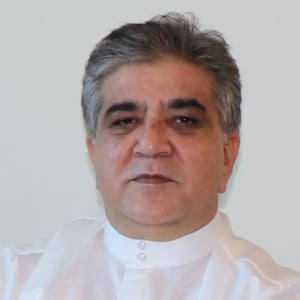


Dr Khaled Alnaas
Director and area delivery manager, Doha City Section, AECOM/Public Works Authority (Ashghal)
Expertise
Project Management, ConstructionLocation
QatarMy highlights
Leading the QAR 3.5 billion Al Bustan North Highway Project in Doha
Overseeing 27 local roads and drainage projects in Doha with a combined value of about US$1.5 billion
Becoming a Chartered Engineer and Fellow of the ICE, and serving as chair of ICE Qatar
A day in my life
No two days are the same.
I begin by reviewing safety, progress, risks and any decisions that could affect the programme. I then meet project teams to remove obstacles and agree priorities.
Part of my day may involve visiting a construction site, checking how traffic and the public are protected, or discussing a technical solution with designers. I also review costs, changes, contractor claims and handover plans.
Much of my role is about connecting people: engineers, planners, commercial teams, authorities and local stakeholders.
I ask questions, listen to different views and make sure decisions are supported by reliable information.
Outside my project role, I spend time on ICE Qatar activities and mentoring engineers.
The most satisfying days are those when a difficult issue is solved safely and the team can move forward.
Civil engineering is deeply collaborative, and listening to planners, site teams, designers, commercial specialists and the public often turn a good technical idea into a successful project.
I would recommend a career in civil engineering because…
It lets you turn ideas into real places and services that improve daily life.
You work with people from many backgrounds, solve new problems and keep learning throughout your career.
Few jobs allow you to point to a road, bridge or community and say, “I helped make that happen”.
We asked Dr…
Which individual project or person inspired you to become a civil engineer?
The Aswan High Dam in Egypt inspired me when I was young.
Its enormous scale and its effect on people’s lives showed me that civil engineering is not only about concrete and steel, it can shape the future of a country.
Complete this phrase: I’m a civil engineer, but I’m also…
I’m a civil engineer, but I’m also a mentor, researcher, squash player and lifelong learner.
What about being a civil engineer gets you out of bed each morning?
Knowing that a decision made today can make a road safer, solve a difficult construction problem or help a community receive better infrastructure.
What’s one great thing that you love about civil engineering that you didn’t know until you started working in the industry?
The best solutions rarely come from one person.
Civil engineering is deeply collaborative, and listening to planners, site teams, designers, commercial specialists and the public often turn a good technical idea into a successful project.
Which civil engineering project (past or present) do you wish you’d worked on?
The Channel Tunnel.
It combined extraordinary underground engineering with international teamwork, logistics and long-term planning.
I would have enjoyed helping to manage the interfaces and risks on such a complex project.
Name one civil engineering myth you’d like to bust.
Myth: civil engineering is mainly about calculations and working with concrete.
In reality, it's also about people, communication, creativity, leadership, digital technology, sustainability and making balanced decisions under pressure.
Has civil engineering helped you overcome any personal hurdles/difficulties?
Working across different countries and with teams from many cultures taught me to communicate clearly, listen carefully and adapt my leadership style.
Those experiences increased my confidence and made me a more open and effective leader.
What motivated you to become professionally qualified?
I wanted my competence, judgement and professional commitment to be assessed against an internationally respected standard.
I also wanted to demonstrate that learning does not stop when you reach a senior position and to set a positive example for the engineers I mentor.
What does being professionally qualified with the ICE mean for your career?
It gives clients, employers and colleagues confidence that my experience and professional judgement have been independently assessed.
It strengthens my credibility as a project leader and supports my work in mentoring, governance and representing the profession as chair of ICE Qatar.
What’s the best thing about being professionally qualified with the ICE?
Belonging to a respected professional community that shares knowledge and puts public safety, ethics and sustainable development at the center of engineering decisions.
How did the ICE and your employer support you to become professionally qualified?
The ICE provided a clear professional framework, guidance, events and a rigorous review process.
My employers gave me opportunities to lead complex projects, work with multidisciplinary teams and take responsibility for safety, quality, commercial decisions and sustainable outcomes.
Colleagues and senior professionals also challenged my thinking and supported my continued learning.
What do you value most about being an ICE member?
The opportunity to keep learning and to give something back.
The ICE connects me with engineers across disciplines and countries, while giving me a platform to mentor younger professionals and promote high standards in Qatar.
How has being a member helped your career?
ICE membership broadened my professional network, strengthened my understanding of good engineering practice and supported my route to Chartered Engineer and Fellow.
It has also created opportunities to contribute through committees, events, mentoring and leadership as chair of ICE Qatar.
Anything else? i.e. personal causes, hobbies
I care strongly about mentoring young engineers and improving opportunities for women in engineering.
I support ICE events, professional reviews and knowledge-sharing in Qatar and Egypt.
I also enjoy squash and staying active, which helps me bring energy and focus to demanding project work.
Dr Alnaas' career path
Education:
- BSc in Civil Engineering, Ain Shams University (1993)
- Professional certificate in project management, American University in Cairo (1996);
- MSc in Civil Engineering, Ain Shams University (2007)
- PhD in Civil Engineering, Ain Shams University (2014)
I began my career as a structural design engineer, then moved through site engineering, construction management, project controls and project management. I now work as a director and area delivery manager for AECOM/Ashghal.
I'm a Chartered Engineer and Fellow of the ICE, a Grade A project manager in Qatar, an IPMA Level C Certified Project Manager and a SAVE International Value Methodology Associate.
Major projects
- Al Bustan North Highway Project, part of the Sabah Al Ahmad Corridor
- Dukhan Highway Central
- Bani Hajer Local Roads and Drainage Project
- Pearl GTL (gas to liquids) Project, Qatar
- Al Sharara–Mellitah 700 km cross-country crude-oil pipeline, Libya
- SUMED Headquarters, Cairo