





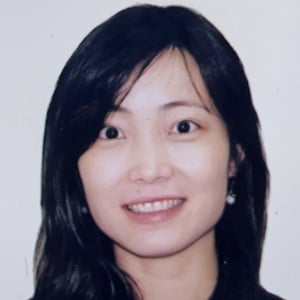
Leung Po Po Lesly
Head of field engineering, MTR Corporation Limited
Expertise
Design, Project Management, StructuralLocation
Hong KongMy highlights
Working as project manager for the Tung Chung Line Extension
Overseeing field engineering at the Oyster Bay Station, part of the Siu Ho Wan Depot Redevelopment project
Working on Lantau Portfolio Projects under the Capital Works Business Unit
A day in my life
My day begins with project update reviews early in the morning before commuting to site, where I typically arrive before others to prepare.
I spend my days engaging with stakeholders, addressing concerns, and monitoring project milestones.
My commitment extends well beyond regular hours—I remain available for urgent matters and find fulfillment in seeing tangible progress.
This dedication once led me to work 4 to 5 overtime shifts weekly for nearly all my previous projects.
To maximise efficiency, I've relocated 10 times as I've transferred between projects, from the north district to the islands.
This nomadic approach helps me develop a deeper understanding of each community I serve.
My philosophy is simple: "If the site is there, I will always be there."
Rail is my dream job because railways connect communities and provide diverse learning experiences within civil engineering.
Which individual project or person inspired you to become a civil engineer?
My journey into civil engineering was inspired by Ir Edwin Ching, Ken Wong, and Ivan Chau, my seniors at the Lo Ma Chau Spur Line (LDB201).
Their pioneering work on the East Rail Line extension demonstrated how railway infrastructure could transform isolated communities.
During my training, I witnessed how their designs not only solved technical challenges but created lasting social impact.
The way they balanced technical precision with community needs showed me that civil engineering, particularly railway projects, offered a unique opportunity to build connections that extend beyond physical structures.
This mentorship shaped my career path and continues to influence my approach to every project I undertake.
We asked Leung…
I would recommend a career in civil engineering because…
I'd recommend a career in civil or infrastructure engineering for its tangible impact on society.
Working on railway projects lets you see how your work transforms communities and improves lives.
The profession blends technical challenges with creative problem-solving.
Despite sometimes requiring long hours and relocations, seeing your projects serve the public for decades provides unmatched satisfaction.
The field offers stable career prospects with continuous learning opportunities.
Complete this phrase: I’m a civil engineer, but I’m also…
...the first lady project manager in MTR and a community connector dedicated to understanding the people my projects serve.
Beyond building physical structures, I build relationships that enable more thoughtful, community-centered engineering solutions that truly reflect the needs of Hong Kong's diverse neighborhoods.
What about being a civil engineer gets you out of bed each morning?
What gets me out of bed each morning is seeing how our railway projects transform communities and connect people.
There's something profoundly satisfying about watching a design on paper evolve into concrete structures that will serve millions for decades.
The technical challenges we solve daily keep my mind engaged, while the visible impact of our work—whether it's a new station that revitalises a neighborhood or a track upgrade that improves reliability—provides a sense of purpose that purely theoretical work cannot match.
Even after 30 years, I still feel excitement when visiting construction sites and witnessing our plans become reality.
What’s one great thing that you love about civil engineering that you didn’t know until you started working in the industry?
One aspect of civil engineering that surprised me was the profound sense of legacy our work creates.
Before joining the industry, I understood we were building structures, but I didn't fully grasp how these projects would become woven into the fabric of communities for generations.
When I revisit stations I helped build 20 years ago and see how neighborhoods have grown around them or hear residents refer to "their station" with pride, it gives me a sense of permanence that few professions offer.
I've also come to appreciate the collaborative nature of large infrastructure projects.
Bringing together experts from diverse fields to solve complex problems creates a unique professional camaraderie that I never anticipated but now deeply value.
Which civil engineering project (past or present) do you wish you’d worked on?
If I could choose any civil engineering project to have worked on, it would be the original Mass Transit Railway (MTR) system development in Hong Kong during the 1970s.
This foundational project transformed Hong Kong's urban landscape and established the backbone of what would become one of the world's most efficient public transportation systems.
Being part of the pioneering team that solved the unique engineering challenges of building a metro system in Hong Kong's dense urban environment and challenging topography would have been incredibly rewarding.
The original MTR not only revolutionised transportation but also shaped Hong Kong's development pattern and community connectivity for decades to follow.
It embodies the very principles of community transformation through railway infrastructure that have defined my career.
Name one civil engineering myth you’d like to bust.
One civil engineering myth I'd like to bust is that our work is all math and no creativity.
In reality, we're problem-solvers who must balance technical requirements with environmental concerns, community needs, and budget constraints.
The most elegant solutions often come from thinking outside the blueprint!
Has civil engineering helped you overcome any personal hurdles/difficulties?
Civil engineering taught me that problems, structural and personal, often have elegant solutions hiding in plain sight.
The discipline has transformed me from a perfectionist into a pragmatist.
When life's foundations shake, I now instinctively look for the critical path forward rather than dwelling on the collapse.
Engineering taught me that even the strongest bridges have built-in flexibility: a principle I've applied to becoming more resilient in my personal life.
Anything else? i.e. personal causes, hobbies
Beyond my engineering work, I'm passionate about cooking, often experimenting with fusion dishes that blend traditional Hong Kong flavors with international cuisines.
Golf provides me with a welcome respite from the technical demands of my profession, allowing me time to reflect while enjoying Hong Kong's beautiful courses.
I find that both hobbies offer a perfect balance to my engineering career.
Cooking satisfies my creative side and precision skills, while golf teaches patience and strategic thinking that I bring back to my projects.
These interests help me maintain perspective and connect with colleagues and community members outside of work settings.
Lesly's career path
I earned my bachelor's degree in civil engineering from the University of Hong Kong in 1993, followed by a masters in structural engineering in 2000.
My career began at a design consultancy before joining MTR Corporation, where I benefited from their structured development programme.
Over three decades, I progressed from assistant engineer to senior engineer, then construction manager, and eventually project manager.
My professional growth was enhanced by specialised training in railway engineering, project management, and leadership.
I also obtained professional qualifications, including professional engineer and member of the Hong Kong Institution of Engineers.
Continuous learning through professional development has been fundamental throughout my career.
Major projects
- Construction management of Kowloon Southern Link (known as Tuen Ma Line – Nam Cheong section), Express Rail Link (high-speed rail, Hong Kong section) and Shatin to Central Link (Tai Wai to Hung Hom section, also known as Tuen Ma Line)
- Design Management of Po Lam Station, North Island Line and Lok Ma Chau Spur Line

Related Content

- Type
- ICE Community blog
What's the foundation of flood resilience? Information
ICE President David Porter explains why being informed about flood risk is so important for the public and civil and infrastructure engineers.

- Type
- Awards and competitions
It’s electrifying! South Wales Metro track transformation bags top award
The electrification of the Core Valley Lines impressed the judges at the 2026 British Construction and Infrastructure Awards.

- Type
- Civil Engineer blog
The long-term consequences of a really good idea
Good decisions made at speed can lead the industry down unintended paths, writes Steven Yule, ICE country representative for the UAE.