





Resilient Transport
Join industry leaders in Manchester this September to explore practical solutions for building stronger, more adaptable networks.
Be part of the shift

The extreme climates experienced this year - and their impact on our infrastructure - raises important questions.
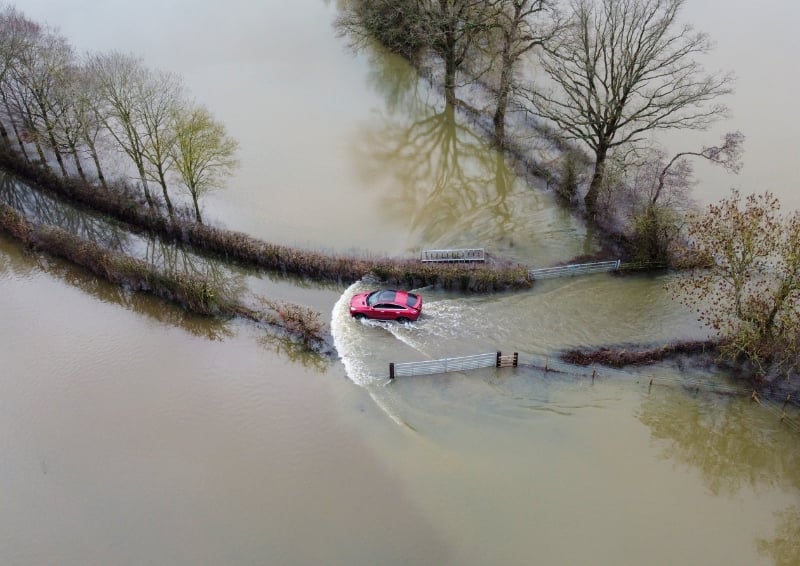
Sustainability experts will discuss whether the infrastructure industry is too late when it comes to measuring resilience at an ICE conference later this month.
Alistair Kean, director for sustainability at COWI and Grace McCormack, senior sustainability consultant at Jacobs, will be on a panel discussing what 20 years of infrastructure assessments can tell us.
Joining them will be Professor Perry Shard, head of quality (UK) at John Sisk and Son, Swati Sing, energy and sustainability global lead at CBRE Global Workplace Solutions, and Ian Slesser, deputy director at BRE.
Taking place in Manchester, ICE Resilient Transport 2026 will bring together infrastructure professionals, asset owners, policymakers and academics to discuss the big challenges facing the sector worldwide.
The conference will also feature Seb Dance, London's deputy mayor for transport.
His keynote will explore how London's transport network is approaching warmer weather, what this means for the design and improvement of infrastructure, and the impact for people in the city.
Other speakers include:
The conference programme is now available, along with information on how to register.
With recent ICE reports highlighting the need for transport networks to safely meet growing demands, the conference programme puts the spotlight on resilience. There are over 50 presentations to choose from.
John Donaghy, human centred design lead at consultancy SLC, will argue that transport resilience depends on inclusive and accessible design. He’ll present a new framework that can help create transport systems that better meet the needs of all users, delivering greater social value and long-term resilience.
Université Libre de Bruxelles’ Professor Philippe Bouillard will explore how improving walking and cycling infrastructure can encourage people to choose active travel over cars.
Yu Han, a research associate at the University of Cambridge, will share how graph neural networks (GNN) can better predict commuting patterns, offering a useful way to test future decarbonisation and resilience scenarios.
Global engineering consultancy Mott MacDonald will share how it uses systems mapping to identify climate risks that affect various infrastructure assets in what can be highly complex networks.
AtkinsRéalis, the construction and engineering company, will explore how to embed climate resilience into rural transport infrastructure. And, Transport Infrastructure Ireland (TII) will share insights on adapting the country’s national road network to withstand the impacts of climate change.
With presentations led by experts from around the world – including the UK, India, Australia, Hong Kong and more – the conference gives attendees the chance to:
Sam Gould, ICE director of policy and external affairs, said: “Resilience isn’t a nice to have.
“With our changing climate and the pressure that growing demand is placing on ageing assets, it’s imperative that transport networks are making changes now to prepare for those around the corner.
“This conference will bring together experts working on practical solutions to these challenges.”


The electrification of the Core Valley Lines impressed the judges at the 2026 British Construction and Infrastructure Awards.

The Royal Academy of Engineering (RAEng) has announced 75 individuals who are making outstanding contributions to the profession.

A new ICE report calls for a review into the value of infrastructure adaptation and climate resilience in order to boost investment.