





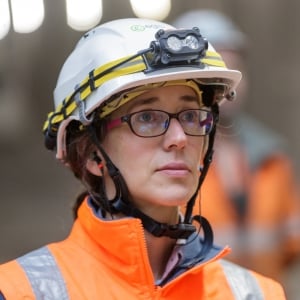
Lucy Rew
Project director and ICE trustee
Expertise
Design, Construction, Project ManagementLocation
FranceMy highlights
Recipient of a QUEST scholarship in 1990
Gained Chartered Engineer (CEng MICE) status in 1998
Elected Fellow of the ICE (FICE) in 2018
A day in my life…
A typical day in my role starts with a site meeting.
I work on a major ground investigation project, and once a week I meet with the contractors and my supervision team. We talk about progress, safety, costs, schedules and any challenges that need solving.
After the meeting, we usually visit one of the drilling sites. It's a chance to see the work first-hand, ask questions and make sure everything is going to plan.
Back in the office, I meet with my team to review what was agreed and who needs to follow up on each action. I also spend time checking emails and helping to solve day-to-day project issues.
Another important part of my job is managing and mentoring a team of engineers. No two conversations are the same, which keeps things interesting.
I might also support colleagues preparing bids for new projects by sharing the latest information from the work we're delivering.
People often think engineering is all about digging tunnels, pouring concrete or carrying out complex calculations. Those things are important, but engineering is really about people.
I would recommend a career in civil engineering because…
I would recommend a career in civil engineering because every day is different. Every project is different. Every day brings a new challenge.
People often think engineering is all about digging tunnels, pouring concrete or carrying out complex calculations. Those things are important, but engineering is really about people.
It's about working as part of a team, solving problems together and making decisions that have a positive impact on others. The projects we deliver can improve people's lives for decades to come.
At the same time, we work closely with colleagues, clients and many other professionals to make those projects happen.
If you enjoy teamwork, learning new things and making a real difference, civil engineering can be an incredibly rewarding career.
We asked Lucy…
Which individual project or person inspired you to become a civil engineer?
My biggest inspiration was my father.
He'd been offered a place to study engineering at the same university I later attended. But my grandfather couldn't afford the fees, so he chose an apprenticeship instead and eventually built a career in manufacturing.
When I was about 14 or 15, my dad and I built a brick barbecue in our garden. It wasn't a major engineering project, but I loved every part of it.
We planned it together, worked out how it would fit into the space, and then turned those plans into something real.
Looking back, that experience helped me realise what I enjoy most about engineering: taking an idea, solving problems along the way, and creating something tangible.
It also gave me an appreciation for the practical skills and craftsmanship that are so important in civil engineering.
Complete this phrase: I’m a civil engineer, but I’m also…
A volunteer knitting and English conversation teacher at my local community association in France.
Name one civil engineering myth you’d like to bust.
The myth I'd like to bust is that engineering is about structures rather than people.
We often think of engineering as bridges, tunnels, buildings and roads.
In reality, engineering is about improving people's lives.
Every decision we make affects someone, whether it's the people who build a project, the communities around it or the people who will use it for years to come.
Technical skills matter, but understanding people, listening to different perspectives and working as part of a team are just as important.
Which civil engineering project (past or present) do you wish you’d worked on?
I think it has to be the Clifton Suspension Bridge. It's so iconic, and as a student at the University of Bristol, I often cycled over it and had fun sliding down the abutments!
What do you think is the most important quality in a leader?
I think the most important quality in a leader is listening.
Leaders are often expected to provide answers, but good decisions start with understanding different perspectives.
On a project, valuable ideas can come from anyone, regardless of their role or level of experience.
Listening helps build trust, encourages people to speak up and makes it easier to identify problems before they become serious. It also helps people feel valued and included.
In a complex project, no one person can know everything. The best leaders create an environment where people are comfortable sharing their knowledge and challenging assumptions, so that the whole team can succeed.
What’s your #1 piece of advice for someone just starting their career as a civil engineer?
My number one piece of advice is to be curious and ask questions.
When you're starting out, it can be tempting to worry about looking inexperienced. In reality, the fastest way to learn is to ask why things are done a certain way and to listen to people with different backgrounds and experiences.
Some of the most valuable lessons you'll learn won't come from textbooks. They'll come from colleagues, contractors, technicians and site staff who have spent years solving real-world problems.
Civil engineering is a broad profession, and no one knows everything.
Stay curious, take every opportunity to learn, and don't be afraid to step outside your comfort zone.
The knowledge and relationships you build early in your career will stay with you for many years.
What are the most important skills for civil engineers today?
The three most important skills for civil engineers today are communication, curiosity and technical judgement.
Communication is essential because civil engineering is a team sport. We work with colleagues, clients, contractors and communities, and projects succeed when people understand each other.
Curiosity helps us keep learning. Every project is different, and asking questions is often the best way to solve problems and develop new skills.
Technical judgement comes from combining knowledge with experience.
Engineers need to assess risks, weigh up different options and make sound decisions, often with incomplete information.
Technology will continue to evolve throughout our careers, but these three skills will always be valuable.
They help us work effectively with people, adapt to new challenges and deliver projects that make a positive difference.
Tell us how you work with people to create or foster diversity in the workplace.
I foster diversity by being curious about people and valuing different perspectives.
Throughout my career, I have learned that no two people bring exactly the same experiences, skills or ways of thinking.
I make a point of listening to a range of views and encouraging quieter voices to contribute, particularly in meetings.
As a manager, I want every member of my team to feel that their opinion matters and that they have opportunities to learn, grow and succeed.
Creating that sense of belonging is just as important as recruiting a diverse workforce.
The most effective teams I've worked with have been those where people respect each other's differences and use them as a strength.
Tell us how you work to address the problems caused by climate change.
One of the most important ways I address climate change is by helping to deliver infrastructure efficiently and getting things right first time.
The tunnels and underground infrastructure we build are designed to serve communities for many decades, so the decisions we make today have long-term consequences.
Throughout a project, I work with teams to understand risks early, challenge assumptions and ensure the right controls are in place.
When projects are well planned and well designed, we can avoid unnecessary construction work, delays, waste and the use of additional resources.
I also believe that investing in public infrastructure is part of the solution to climate change.
Tunnels can support sustainable transport networks and other essential services that help communities reduce their environmental impact.
Good engineering is about creating infrastructure that is safe, efficient and resilient for future generations.
What do you think is the greatest challenge the industry is facing and how can civil engineers overcome this issue?
I think the greatest challenge is delivering the infrastructure society needs while balancing cost, environmental impact and public expectations. There are rarely simple answers.
Civil engineers must weigh up competing priorities and make decisions that will affect communities for decades to come.
We can overcome this challenge through good engineering, good communication and good leadership.
By understanding risks early, working collaboratively and making informed decisions, we can deliver infrastructure that is safe, resilient and provides lasting benefits for society.
Has civil engineering helped you overcome any personal hurdles/difficulties?
Civil engineering has had a profound impact on my personal life.
I met my husband while working on a tunnel construction project, and my career brought me to France, where I have lived and worked for the last 27 years.
What started as a career choice became a life journey.
Civil engineering has given me opportunities to work on fascinating projects, travel, experience a different culture and build lasting friendships and professional relationships.
Looking back, it has shaped not only my career, but also where I call home and the people I share my life with.
Any hobbies?
Outside work, I enjoy spending as much time as possible outdoors.
I'm a keen runner, cyclist and cross-country skier, and have completed several marathons, mountain trail races and ultra-distance cycling events.
I'm passionate about wildlife-friendly gardening and creating habitats for nature.
I also enjoy knitting and sewing, and take great satisfaction in wearing something I've made myself.
I'm a volunteer with a local community association, where I teach a knitting-in-English class and serve on the board.
I love travelling and exploring new places, particularly on foot or by bike.
Lucy's career path
- Degree in civil engineering with study in Continental Europe (MEng), University of Bristol
- ICE QUEST scholar
- Started my career in the UK before moving to France in 2000
- 32 years' experience delivering major infrastructure and tunnelling projects
- Chartered Engineer and member of the ICE (CEng MICE)
- Elected Fellow of the ICE (FICE)
- Project director, mentor and people manager, supporting the development of the next generation of engineers
Major projects
- Heathrow Express Rail Link (whenever I travel to Heathrow on the Elizabeth Line, I walk on the terminal 3 platform tunnels that I helped construct)
- EOLE project in Paris, a major train tunnel extension under central Paris
- SMP4 contract, a high speed rail tunnel between Lyon and Turin: we constructed the most technically challenging section with over one metre of convergence through one of the faults
- CERN’s Future Circular Collider, the feasibility study ground investigations


Related Content

- Type
- News
True collaboration doesn’t mean always agreeing, senior infrastructure leaders stress
Drawing on the experience of delivering complex programmes, panellists at the latest ICE Connects: Women in Fellowship event discussed the opportunities and challenges involved in creating collaborative environments.

- Type
- News
New standard gives infrastructure teams practical tools to improve productivity
The industry-sponsored PAS 4010 standard has been published today alongside guidance to support its implementation.

- Type
- ICE Community blog
From aspiration to action: how to embed inclusive infrastructure in everyday engineering
People’s experiences of infrastructure are shaped by a variety of factors. Overlooking these leads to consequences such as inconvenience, exclusion and even safety risks.