





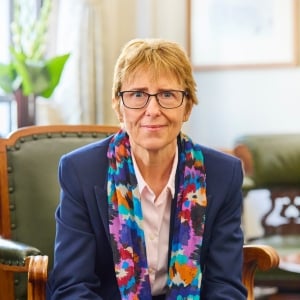
Julie Louise Wood (ICE's 162nd President)
Director and Global Fellow, Mott MacDonald
Expertise
Design, Systems thinking, Major projects leadershipLocation
North EastMy highlights
Appointed as the 162nd president of the Institution of Civil Engineers
Project director for the McLaren Technology Centre
Appointed one of Mott MacDonald’s 12 global Fellows
A day in my life…
I begin each week by reviewing my diary and identifying where I need to focus my attention.
A typical day might begin with meetings with clients and senior stakeholders, talking about what’s working well, what challenges we’re facing, and what’s coming next.
I’ll also spend time with project teams, reviewing technical work and helping solve complex problems. What I’ve discovered is that, when you’ve been in the industry for a long time, ‘new’ problems are very rare. There are usually lessons from past projects that I can draw on.
A lot of what I do is about connecting people and ideas so teams can make better decisions.
Outside of work, I usually have two books on the go, one fiction and one non-fiction. I enjoy listening to podcasts while walking, and spending time with my family. I also enjoy listening to music, anything post punk, new wave or rock.
Stay open to opportunities, especially the ones you did not expect. Every project, role and challenge can teach you something useful, even when it was not part of your original plan.
I would recommend a career in civil engineering because…
Civil engineering is a career that you can grow and shape around your interests.
I started as an apprentice, learning by doing, and over time, I found the areas where I could make the biggest impact.
It’s also incredibly varied. I’ve worked in transport, healthcare, science and infrastructure, and there are opportunities to make a real difference in areas such as climate resilience and sustainability.
You can develop deep technical expertise, move into leadership, or find a balance between the two.
What makes civil engineering special is that your work affects real places and people. Whether it’s transport, clean water or vital public services, engineers solve problems that matter to society.
Few careers offer that combination of variety, challenge and purpose.
We asked Julie…
Which individual project or person inspired you to become a civil engineer?
I grew up in Teesside, surrounded by engineering and industry.
I was fascinated by structures such as the Transporter Bridge, which connects communities and industry across the River Tees, and by the steelworks along the coast.
My grandfather was a steelworker and hearing him talk about how steel was made gave me a real appreciation for the process of turning raw materials into something useful.
I loved seeing how engineering shaped places and communities.
Later, my then future husband suggested that engineering might suit me because I was very good at maths.
That led me to knock on the doors of local engineering firms and getting an apprenticeship.
That opportunity opened the door to an extraordinary career, taking me from being an uncertain 18-year-old to becoming the president of the ICE!
It just shows you how much opportunity there is within this profession.
Complete this phrase: I’m a civil engineer, but I’m also…
...I’m also a photographer, a partner, a mum, a mentor and someone who loves learning.
Photography is my favourite way to relax. I enjoy looking for light, detail and interesting landscapes. It helps me slow down and pay attention to the world around me.
When you’re out with a camera, you can’t change the weather or the tide, so you learn to work with nature, rather than against it.
I’m also passionate about mentoring and supporting others. I’ve benefited from great mentors throughout my career, and I enjoy helping people recognise their strengths and build confidence.
I also have a reverse mentor, which challenges me to see things from new perspectives and keeps me learning.
Name one civil engineering myth you’d like to bust.
One myth I’d like to bust is that civil engineering is only for people who want to work onsite or who are brilliant at maths.
Both are important parts of the profession, and we need people who excel in them.
But civil engineering also needs a much wider range of strengths.
Engineers work in design, construction, sustainability, strategy, technology and leadership.
We need technical specialists, practical problem-solvers, creative thinkers, clear communicators and people who bring different disciplines together.
Civil engineering offers many routes, and many different talents contribute to better outcomes for society.
Which civil engineering project (past or present) do you wish you’d worked on?
The project I wish I’d worked on is the Empire State Building.
It’s just beautifully designed, and detailed. I’ve always been fascinated by how quickly it was built and the craftsmanship in its construction.
At the time, it pushed boundaries of what people thought was possible, but the team behind it had the confidence, discipline and attention to detail to go ahead and do it.
It has a grace and elegance about it that means it’s still an icon, almost a century later.
What do you think is the most important quality in a leader?
Leaders need good judgement.
People measure leaders by the decisions they make every day, especially when projects are complex and uncertain.
Good leaders need resilience, curiosity and the ability to help others navigate challenges without becoming overwhelmed by them.
I also believe leadership is about creating the conditions for others to succeed.
On major projects, you’re often leading experts from many different disciplines.
Your role is to help them do their best work, recognising that they may have technical expertise that you don’t, and so you support them to put that to the best possible use.
Good communication skills are a must.
What’s your #1 piece of advice for someone just starting their career as a civil engineer?
Every opportunity provides something.
Sometimes you’ll be asked to do work that doesn’t seem exciting or important, but those experiences often teach you valuable lessons and help people notice what you can do.
Early in my career, I volunteered to help solve a problem that others weren’t particularly interested in tackling. It wasn’t glamorous work, but I approached it positively and even found ways to make it more interesting to me.
So, my advice is to stay open to opportunities, especially the ones you did not expect.
Every project, role and challenge can teach you something useful, even when it was not part of your original plan.
What are the most important skills for civil engineers today?
The first is technical understanding. Having a solid grounding in how things work will always be important.
The second is systems thinking. Modern infrastructure is connected, so engineers need to understand how different parts of a system influence one another and work collaboratively across disciplines.
The third is adaptability. The profession is changing quickly, and throughout your career you’ll encounter new technologies, new challenges and opportunities to work in different sectors.
Engineers who combine these three will be well placed to make a real difference.
Tell us how you work with people to create or foster diversity in the workplace.
Diversity is something I care deeply about because my own route into engineering was unusual.
I try to create environments where people feel comfortable contributing, asking questions and sharing ideas.
I believe diversity is about more than representation. It’s about recognising potential that may not always be obvious and helping people develop confidence in their abilities.
Throughout my career, I’ve deliberately worked with people who think differently from me. It can make discussions more challenging, but it leads to stronger decisions and better outcomes.
Fostering diversity means widening routes into the profession. But access is only the beginning. It also means recognising potential and continuing to provide opportunities, support and sponsorship throughout people’s careers, so they can achieve their potential.
Tell us how you work to address the problems caused by climate change.
Climate change needs to be considered in every major decision we make.
I take a systems-thinking approach starting with the outcome we want to achieve and then consider how we can make better use of existing assets before creating something new.
When new infrastructure is needed, we can reduce impact through smarter design, efficient use of materials and considering carbon, energy and resilience from the earliest stages of a project.
Major projects also have the potential to create wider benefits for communities and support more sustainable ways of living and working.
As engineers, we have an important role to play in helping society respond to climate change while still delivering the infrastructure people need.
What do you think is the greatest challenge the industry is facing and how can civil engineers overcome this issue?
One of the biggest challenges is making better decisions across whole systems rather than treating projects in isolation.
Transport, energy, water, health, housing and nature are connected, but we do not always plan them that way.
Civil and infrastructure professionals can improve outcomes by bringing evidence, technical judgement and systems thinking into decisions much earlier, starting with the outcome needed.
We can make better use of existing assets before reaching for new construction.
We must also communicate the choices clearly to communities, clients and decision-makers.
Good engineering is not only about building. It's about improving outcomes.
Has civil engineering helped you overcome any personal hurdles/difficulties?
The skills I developed through engineering taught me how to break down complex problems, stay calm under pressure and keep moving forward through difficult situations.
They also helped me understand my own strengths and how I work best.
Most importantly, engineering showed me that difference can be a strength.
It helped me develop resilience, self-belief and a sense of purpose that extends far beyond my career.
Do you have any personal causes?
I’m passionate about social mobility and making sure talented people can find a route into civil engineering, whatever their background.
My own career started through an apprenticeship, and I know how life-changing those opportunities can be.
Julie's career path
- Started my career through an engineering apprenticeship before studying for a degree in civil engineering
- Built early experience working on projects such as the Gatwick Airport North Terminal
- Developed a career leading major infrastructure projects across science, transport, healthcare and commercial sectors
- Became a director and Fellow at Mott MacDonald, where I specialise in major project leadership (there are only 12 Fellows globally)
- Served in leadership roles within the ICE, including chair of the Membership Committee, chair of the Financial, Assurance and Risk Committee, Senior Vice President and trustee
Major projects
- British Library
- Euston Station
- Francis Crick Institute
- Gatwick Airport North Terminal
- Infrastructure Systems Review
- Lakeside Shopping Centre
- McLaren Technology Centre (HQ)
- New Hospital Programme
- Transpennine Route Upgrade



Related Content

- Type
- News
ICE Trustees strategy day update – February 2026
At their annual strategy day, trustees and the ICE executive team met to hear about NISTA's future plans and discuss the intelligent strand of the institution's 2026-2030 strategy.

- Type
- Awards and competitions
Recycled materials offer sustainable future for concrete in royal patron award-winning research
The annual award celebrates outstanding ideas, research and best practice.

- Type
- News
What do the 2026 party conferences mean for infrastructure?
The ICE breaks down the headline announcements from five of the major UK parties.