





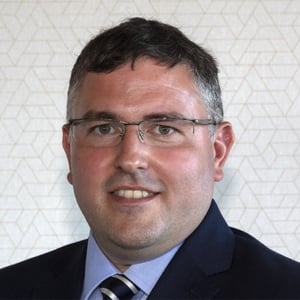
Paul Eckersley
Project director for Turner & Townsend and project executive for the Environment Agency
Expertise
Design, Environmental Management, GeotechnicalLocation
North EastMy highlights
Developing and delivering the nationally recognised Tees Tidelands Programme
Working on projects big and small, knowing that both carry equal importance to somebody
A day in my life
As civil engineers say, no two days are ever the same!
My days will usually include a project team meeting, though. We update each other on progress and we plan what we need to do. I speak with my project managers to find out what is worrying them and how I can help.
I review documents such as business cases, cost reports, risk registers and drawings and give feedback. I read emails and messages and answer any questions.
Some days, I visit sites before or during construction. I walk around with the contractors, looking for anything we might have missed or helping to solve problems.
Being a client project executive is a varied role. I'm involved in projects from start to finish, justifying the project through business cases, through design, then construction before handover to the teams who will use it.
One of the best things about the job is seeing a project go from an idea on paper to something real that people use every day.
What inspired you to become a civil engineer?
My father used to claim he built the M6 motorway. The truth was that, during a summer job, he worked on it as an assistant to a surveyor.
One of his jobs was to hold a levelling staff and sometimes putting it on his boot so they could claim more money from the client!
Later, at secondary school, a careers advisor suggested my interest in maths and physics would suit an engineering role.
I applied to several universities to study different types of engineering. I picked civil engineering at the University of Nottingham because I loved the university so much!
It was also sponsored by Costain through university, and during summer holidays, I worked on real construction projects and gained experiences that I will never forget.
Those experiences helped confirm that civil engineering was the right career for me.
We asked Paul…
I would recommend a career in civil or infrastructure engineering because...
It's equally challenging and rewarding.
You get the chance to help create things that make a real difference to people's lives, protect the environment, and support the economy.
You also work with talented and hardworking people who care about what they do.
Many are great problem-solvers, creative thinkers and innovators.
Complete this phrase: I’m a civil engineer, but I’m also …
A dad, a husband, a football coach, a mentor and a volunteer.
Name one civil or infrastructure engineering myth you'd like to bust.
"There’s never anyone working in the roadworks."
People often drive past roadworks and say: "There’s nobody working there!"
The truth is that work may have happened earlier in the day, during the night, or in a different part of the site.
Sometimes the cones and barriers need to be put out before work starts and left in place until it's safe to remove them.
On larger projects, different teams move along the road carrying out different jobs at different times.
So, even if you can't see people working when you drive past, there's usually a reason why the roadworks are there.
How does your role contribute to addressing climate change?
Working at the Environment Agency, I help deliver projects that protect people and nature from the effects of climate change.
Climate change can cause rising sea levels, more extreme weather, flooding, and changes to plant and animal habitats.
The projects I work on help communities become more resilient to flooding and create better places for wildlife to live.
We also look for ways to reduce the environmental impact of construction by lowering carbon emissions, reducing waste, using fewer plastics, and working with natural processes wherever possible.
It is rewarding to know that the projects I help deliver will protect people, support nature, and benefit future generations.
How does your role contribute to making the industry more diverse and inclusive?
I help make engineering more diverse and inclusive by making sure everyone has a voice.
Some people are confident speaking in meetings, while others may be sitting quietly with a brilliant idea.
Some people find it easier to share their thoughts one-to-one rather than in a group.
Others may communicate in different ways or come from different backgrounds, industries, or countries.
Experience is important, but great ideas can come from people at any stage of their career.
Whether someone is a logical thinker, a creative thinker, or brings a completely different perspective, they all have a role to play.
As a leader, my role is to understand different personalities and make the best use of each person's skills to build the strongest possible team.
The more diverse a team is, the better the chance of finding the best solution.
Civil engineering needs people with different skills, experiences, and ways of thinking.
By welcoming everyone, we can build better solutions for people, communities, and the environment.
What role does digital technology play in your job?
Digital technology plays a big part in my job.
We use digital drawings, maps, and computer models to help us design projects and understand how they will work before construction starts.
Technology also helps us make better decisions by analysing data and predicting future risks, such as flooding and the effects of climate change.
We use AI chatbots to answer questions and share information with local communities about our projects.
On construction sites, diggers and bulldozers can use GPS technology to help them dig at the correct position and depth, making work safer and more accurate.
We also use drones to take photographs and measure progress.
Special software helps us compare progress each month and check that work has been completed before payments are made.
Digital technology helps us work more safely, efficiently, and accurately.
What motivated you to become professionally qualified?
I wanted to become a Chartered Engineer to prove to myself that I could achieve it.
I enjoy learning new things and improving my skills.
Becoming professionally qualified showed that I had the knowledge, experience, and competence to do my job to a high standard.
It also demonstrates a commitment to continuous learning.
Engineering is always changing, with new technologies, ideas, and ways of working being developed all the time.
As a Chartered Engineer, I continue to learn and develop, helping me stay up to date and become a better engineer and leader.
How has being a member helped your career?
It has allowed me to meet and learn from other engineers, share ideas, and keep up to date with new developments in the industry.
Being part of a professional organisation shows that I'm committed to high standards and continuing to develop my skills.
It has helped me grow in confidence, build my professional network, and progress in my career.
How has achieving Fellowship impacted your career?
Achieving Fellowship has reinforced my confidence in my ability to lead teams and challenge the norm.
It recognises the experience and leadership skills I have developed throughout my career and motivates me to continue supporting and developing others.
What’s the biggest/most complex thing you’ve made out of Lego?
The Concorde – 2,083 pieces, over 1m long, with working landing gear, flaps, nose and removable section to see the cabin including the tiny toilets!
It sits proudly in my garden office! It took about five evenings to build but I wish it took longer.
Paul's career path
I studied maths and physics at A-levels before going to university to study civil engineering. I completed a four-year masters degree.
After university, I joined Costain as a site engineer. Over the next few years, I gained experience and progressed to senior site agent.
I then became a project manager for a specialist contractor before moving to a project management consultancy, where I worked as senior project manager, associate director, and now, project director.
My career shows that there are lots of different paths within civil engineering. With hard work, experience, and a willingness to learn, there are many opportunities to progress and take on new challenges.
Major projects
- Castleford Footbridge and Fishpass
- Glasshoughton Link Road
- Yorkshire Water Amp 5
- Greater Manchester Wast PFI
- Reading Station Redevelopment
- Heysham to M6 Link Road
- Manchester Airport Highways Schemes
- Marton West Beck Flood Alleviation Scheme
- Stokesley Flood Alleviation Scheme
- Yarm Gates Replacement
- Tees Tidelands Programme




Related Content

- Type
- News
Nominations open for ICE president
Candidates who meet the requirements are invited to stand to represent the institution as a future president of the ICE.

- Type
- Infrastructure blog
Devolution, ambition, and public control: reflections on Burnham’s first 90 days as PM
Andy Burnham has brought an injection of energy into Britain’s top job. But what does his tenure spell for infrastructure?

- Type
- ICE Community blog
What's the foundation of flood resilience? Information
ICE President David Porter explains why being informed about flood risk is so important for the public and civil and infrastructure engineers.