





Drawing on the experience of delivering complex programmes, panellists at the latest ICE Connects: Women in Fellowship event discussed the opportunities and challenges involved in creating collaborative environments.
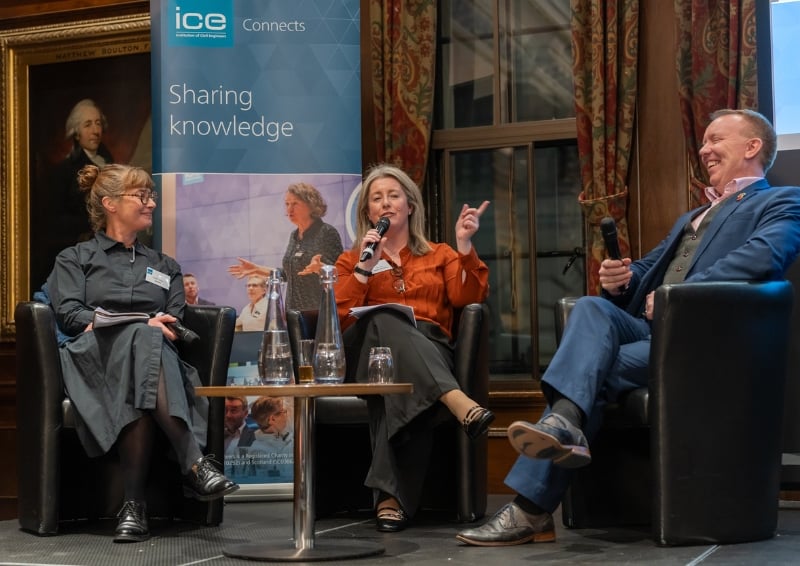
“A truly collaborative environment is about producing great outcomes together, not always agreeing,” Isabelle Adams, enterprise director for the Great Grid Partnership at National Grid, has said.
Speaking at the latest ICE Connects: Women in Fellowship network event, Isabelle explained that “bringing together different organisations, experiences and perspectives naturally creates healthy challenge”.
“What matters is making that disagreement constructive, not personal, and coming together for the best outcome.”
Hosted by network chair Michele Dix and chaired by ICE Past President David Porter, the panel discussion brought together senior infrastructure leaders to explore what good collaboration looks like in practice. The focus was on moving beyond talking about collaboration to how we can embed it in the delivery of major projects.
The event formed part of the award-winning ICE Connects programme, which continues to support greater representation and leadership among women within the institution.
Joining the discussion was Claire Carr, project leader at Laing O'Rourke.
Collaboration is more than a contract
Collaboration is fundamentally about behaviour, not just organisational structures, the panel agreed.
While formal arrangements such as alliances, joint ventures and integrated teams can support collaborative delivery, successful outcomes depend on trust, openness and a willingness to work towards shared objectives.
With delivery environments becoming increasingly complex, the conversation turned to how this trust can be established across multiple organisations and intricate team structures.
Getting it right at the beginning
The panellists discussed the value of investing time at the outset of projects to align around common goals, understand different organisational drivers and create clear channels for communication.
They suggested that strong collaboration is often most visible during moments of challenge, when established relationships enable partners to respond collectively rather than retreat behind contractual boundaries.
They also reflected on the importance of moving beyond traditional client-supplier relationships to create cultures where teams feel empowered to challenge, innovate and solve problems together.
The recurring message was that trust cannot be imposed through process alone.
Instead, it is created through consistent behaviours, transparency and a commitment to shared success.
Claire noted that “It’s just as important to reflect on examples of bad collaboration as it is to study good ones. It requires more effort to be collaborative than not.”
The role of leadership
The discussion highlighted the critical role leaders play in shaping collaborative cultures.
As major infrastructure programmes become larger, more interconnected and increasingly multidisciplinary, leaders must create environments where diverse expertise can flourish.
This requires not only technical competence but also strong communication, emotional intelligence and the ability to bring together stakeholders with different perspectives and priorities.
The panel reflected on the need for leaders to model collaborative behaviours, encouraging constructive challenge and recognising the value that different viewpoints bring to better decision-making.
Drawing on his own leadership experience, David Porter added: "Collaboration can be a buzzword when bidding for projects but it doesn’t always happen throughout the project, sometimes it happens organically.
“In my experience collaboration happens when a climate is created that puts the client needs first.”
Diverse perspectives create better outcomes
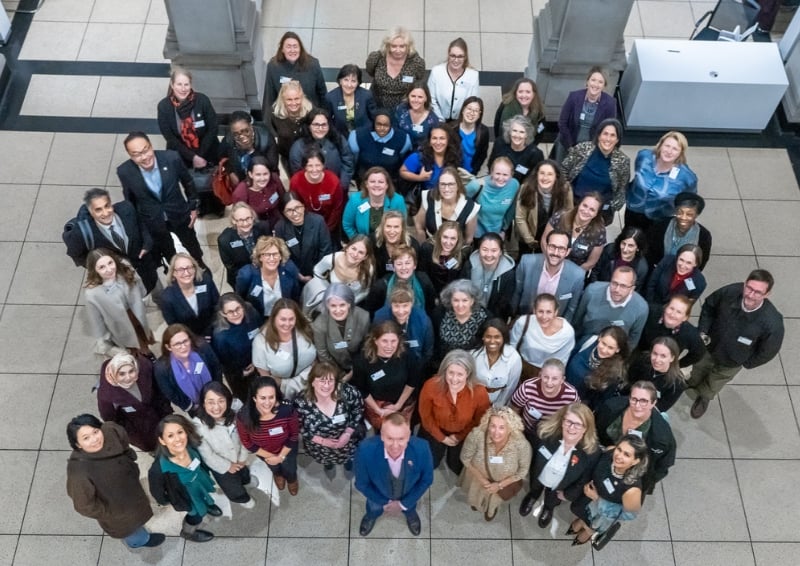
A fitting backdrop to the discussion was the continued success of the ICE Connects network.
Since its launch in 2021, the number of female ICE Fellows has grown from 268 to 523, an increase of more than 95%. This accounts for almost 10% of all Fellows of the institution.
Throughout the evening, speakers and attendees reflected on the importance of diversity within leadership teams and professional institutions.
Diverse experiences and perspectives were recognised not only as a matter of representation but as a practical contributor to better decision-making, stronger innovation and more resilient project delivery.
As Michele Dix noted, Fellows of the ICE play a vital role in shaping policy, sharing knowledge and influencing the future of infrastructure delivery.
The collaborative spirit evident throughout the evening demonstrated the value of bringing together leaders from across the profession to exchange ideas and learn from one another.
Digital tools are enablers, not the solution
Audience discussion also examined the contribution of digital tools, data sharing and common information environments to project success.
While technology can strengthen collaboration by improving visibility, consistency and information flow, the panellists agreed that digital systems are only effective when coupled with a culture that encourages openness and knowledge sharing.
The consensus was clear: technology can support collaboration, but people create it.
Looking ahead
As the scale of infrastructure challenges continues to grow, the industry's ability to collaborate across disciplines, organisations and sectors will increasingly define its success.
For those attending this latest ICE Connects event, collaboration was not presented as an aspiration. It was shown as a practical, essential capability for delivering the infrastructure society needs.
Looking to the future, Michele Dix remarked, “We have to make sure that we work hard to embed the right culture to allow collaboration to thrive. This comes down to leadership and giving space for a good discussion and meaningful debate.
“Collaboration is really hard, so we have to work on it every day.”


You may also be interested in

- Type
- News
‘Don’t outsource your professional judgement or critical thinking,’ AI optimists warn
As the use of artificial intelligence (AI) accelerates, a panel discussion in Bristol explored why human judgement and oversight remain essential.

- Type
- Webinar
Global Perspectives On: safe and inclusive infrastructure
How can inclusive design remove barriers and improve lives? Hear global perspectives from industry experts on creating safer, more accessible infrastructure for diverse communities.

- Type
- News
ICE Wales Cymru publishes manifesto amid ‘unprecedented and deeply concerning’ flood risks
Flood risk management was a top concern in the new Infrastructure in Wales 2026-2031: prosperity, growth and jobs report.