

Year
2025Duration
36 weeks totalCost
£4.24MLocation
United KingdomProject achievements
Solved the problem
Repaired the damage caused by Storm Babet in the winter of 2023
Used engineering skill
Used temporary works to safely complete the project in a challenging coastal setting
Conservation
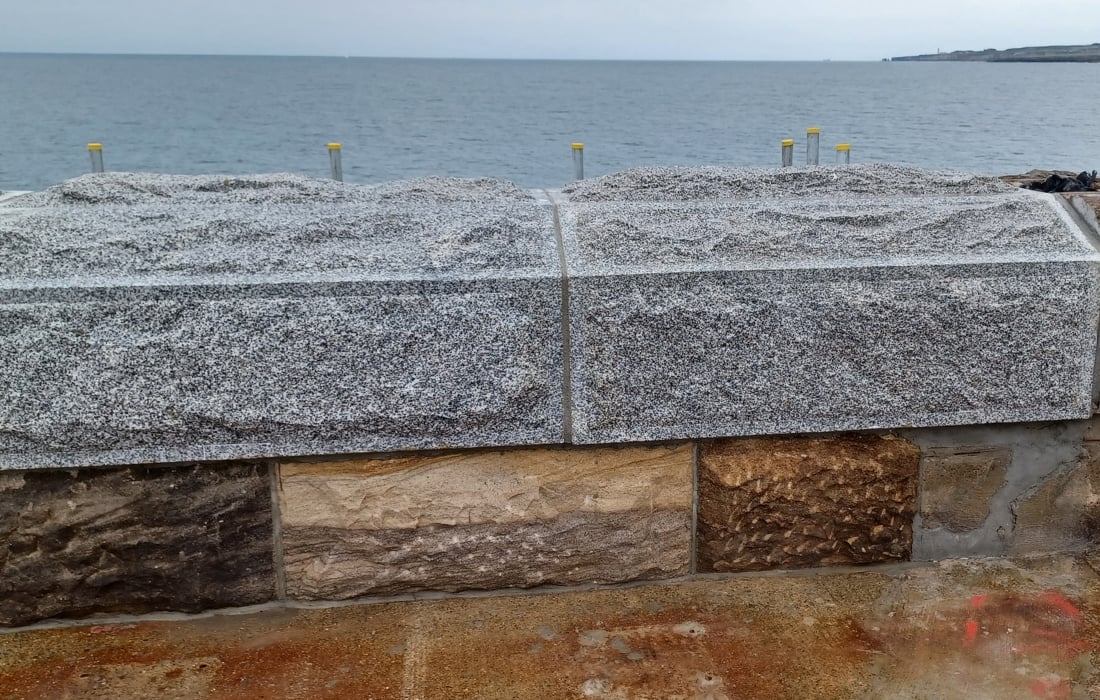
Reused as much of the original stone as possible, and sourced similar material from Portugal
Repairing storm damage while preserving historical heritage
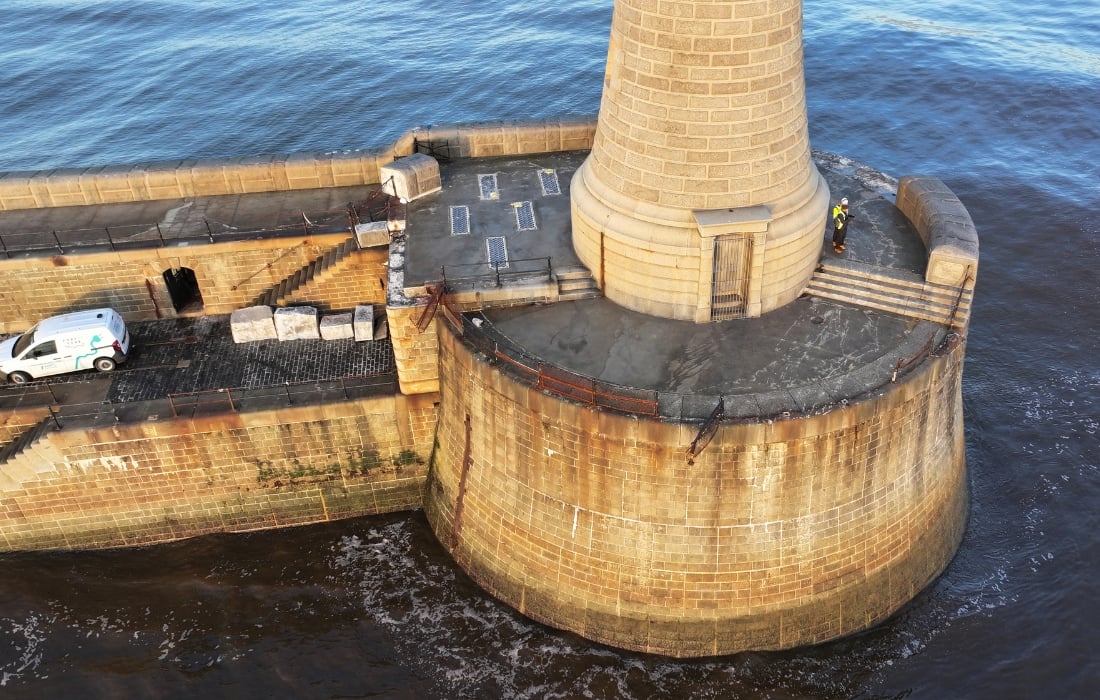
The North and South Shields Piers in north-east England shelter the River Tyne from the full force of the North Sea.
They've been a familiar landmark for over 150 years, with construction of the North Pier starting in 1854. It was seen as one of the most challenging civil engineering projects of its time, taking 45 years to complete.
It was destroyed by a huge storm two years after completion, but it was repaired in 1909 by none other than John Wolfe-Barry, the ICE Past President behind the Tower Bridge in London.
In October 2023, another storm badly damaged the piers, and they were once again in need of repair, including:
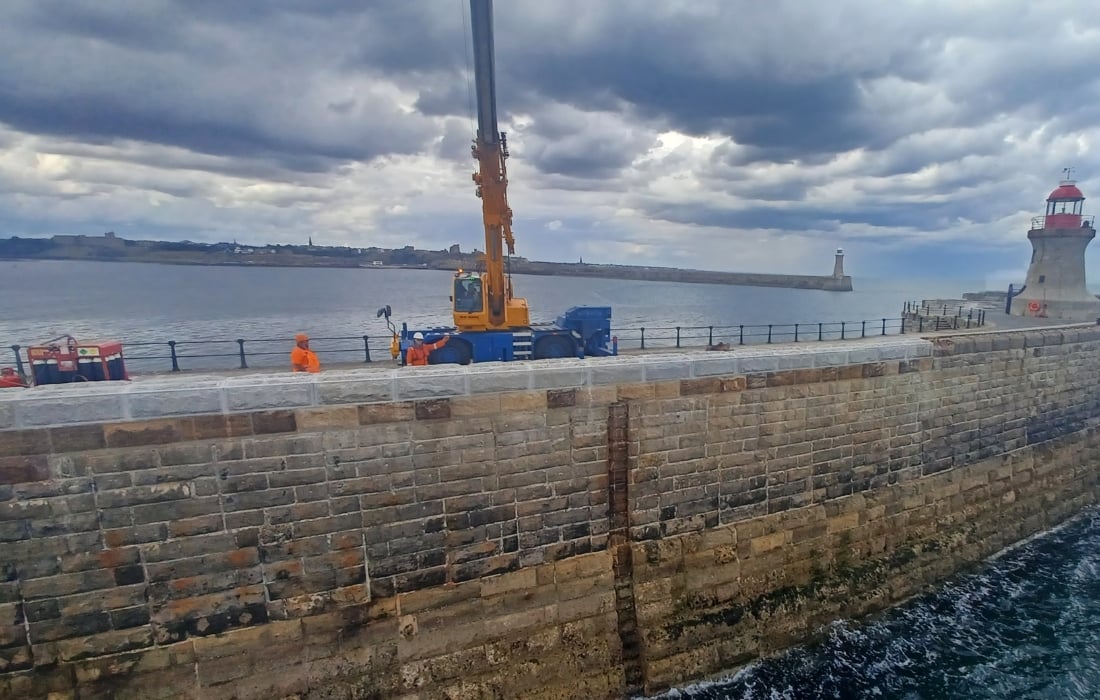
- reconstructing damaged sections of the pier walls
- replacing stonework at the top of pier walls
- replacing handrailing, pavement and steps
- replacing the lighthouse dome and internal lighting
The repairs weren't without their challenges, beginning with the difficult setting, right by the sea.
In addition, the stonework required to repair the pier walls was very rare and no longer available in the UK. The project team found stone blocks that were similar in appearance and tough enough for the coastal location, and arranged to have them shipped in from Portugal.
However, given the structure's heritage, the project team wanted to re-use as much of the existing material as possible.
The storm had moved many of the original stone blocks, but they weren't damaged and could be re-used. In doing so, the team reduced waste on the project, which lessened its impact on the environment while ensuring it wasn't too expensive.
To ensure the refurbished piers maintained their historic appearance, architect Purcell was appointed to design the replacement handrailing, as well as restoration of the lighthouse on the southern pier.
Did you know …
-
One of the most challenging aspects of the project involved installing stone blocks that were very heavy, weighing 2.5 tonnes each (about the same as an adult hippopotamus), at the furthest point of the North Pier.
-
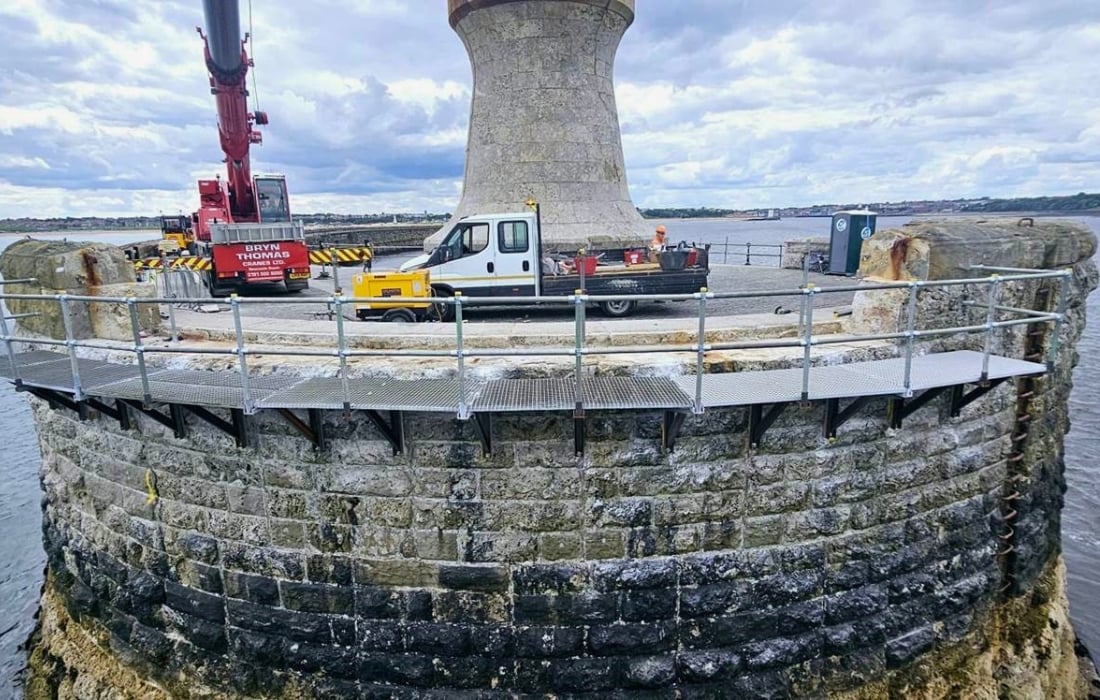
The project team had to be very careful not to damage any existing stonework during the installation process. Temporary works such as steel platforms and handrailing, designed to withstand the force of waves, were used.
-
To maintain the original appearance of both structures, damaged materials were carefully removed using traditional construction methods, including the use of hand tools.
Working in harsh sea conditions
With the repairs involving working next to the water, the project team installed temporary handrailing and platforms to ensure the works could be safely completed.
Temporary works were also required to prevent further damage from the sea to both structures, and to support the increased weight applied by the equipment used to complete the works.
To prevent bad weather from delaying the project, a decision was taken not to work during the winter months.
In working close to the sea, the focus was on controlling construction activities to minimise the chance of pollution and to protect wildlife.
Damaged concrete and handrailing removed from the pier have been recycled.
Measures were introduced to reduce the amount of carbon generated by the project. This included reducing the amount of fuel used and using environmentally-friendly equipment with low emissions.
Keeping locals safe
The North and South Piers are very important to the communities in which they are located, resulting in a high level of public interest.
The client, Port of Tyne, was committed to ensuring regular communication was issued to the public to ensure they remained up to date.
This was even more important due to the need to close both piers and ensure the public did not trespass onto to the structures due to significant health and safety concerns.
As a result, a full-time security guard was employed and signs notifying the public of the dangers of accessing the site were on display. All employees were educated on how to manage trespassers while avoiding confrontation.
With the project taking place during the school summer holidays, a health and safety initiative called ‘No Access, No Excuses’ was launched to warn school children of the dangers of playing on the piers. This involved sending a short presentation to schools in the local area.
People who made it happen
- Client: Port of Tyne
- Consultant: Total Project Integration
- Contractor: Southbay Civil Engineering Limited
- Architect: Purcell
- Stone mason: Classic Masonry