





When he started the scheme, flood risk engineer Aman Khandelwal couldn't have guessed how profoundly the experience would change him.

Whenever I mention that I’m a Future Leader, I’m usually met with the same questions.
What exactly is the scheme?
What do you actually do?
What do you get from it?
On paper, the scheme is an incredible opportunity. Each year, the president of the ICE selects a small cohort of graduate, technician and degree apprentice members to become Future Leaders.
Participants work closely with the president throughout their year, gaining unique access to industry leaders, strategic projects, ICE committees, major events and policy discussions.
It’s prestigious, competitive and highly sought after.
Yet after seven months as one of David Porter's Future Leaders, I’ve realised that the true value of the scheme can’t be found in a brochure or job description.
Learning beyond the day job
One of my earliest experiences with David was attending the 200th anniversary celebrations of the Menai Suspension Bridge in Wales. I was inspired by Thomas Telford’s design and the enthusiasm of the ICE Wales Cymru team.
Since then, I’ve had the privilege of:
- attending discussions in the House of Lords;
- engaging with talented young people full of ambition and ideas; and
- participating in a Smeatonian Society of Civil Engineers discussion with some of the most experienced professionals in our industry.
I’ve sat in rooms where decades of engineering knowledge are shared openly and generously.
I’ve observed how committees operate, how volunteers support the institution, and how engineers influence policy, education and society.
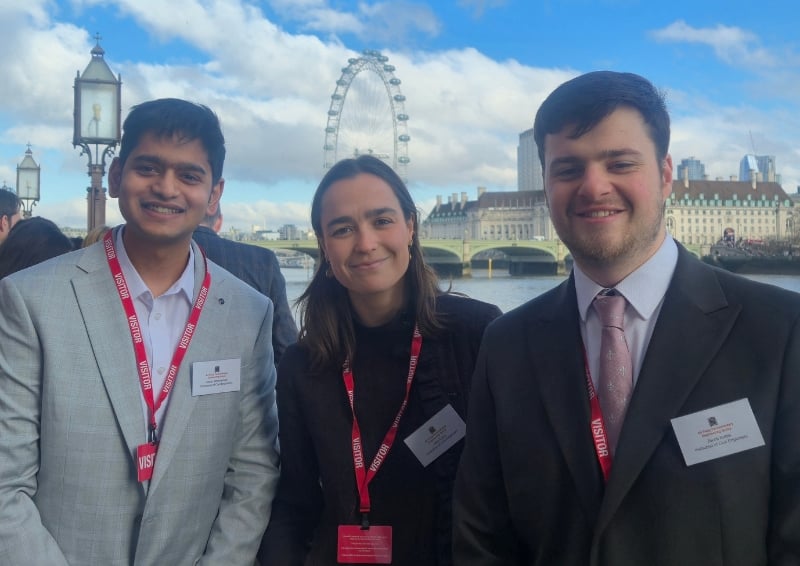
Touring the country
I’ve visited Liverpool, Leicester and Nottingham with David, as part of his presidential visits.
In Liverpool, we experienced a city renowned for its rich maritime heritage, historic docks, and continued regeneration along the waterfront.
Meanwhile, the East Midlands visit highlighted the region’s strong industrial legacy and its growing focus on sustainable infrastructure.
What stood out most across both visits was the diversity of people I met.
They each brought different experiences and perspectives yet were all united by a shared passion for civil engineering and a commitment to the projects they are delivering.
Leadership is a verb
David Porter brings the same energy to every conversation, every event and every person he meets.
Whether speaking to students, senior industry figures, volunteers or Future Leaders, he demonstrates the same enthusiasm, curiosity and respect.
That taught me that leadership isn’t a position. It’s a practice.

Making engineering more inclusive
Alongside the events and visits, I'm contributing to a project focused on inclusive STEM engagement, which has been one of the most rewarding parts of the programme.
The people involved are passionate about making engineering safer, more inclusive and more representative of the communities it serves.
As the world's oldest professional engineering institution, the ICE has a responsibility not only to preserve its heritage but also to ensure that everyone feels they belong within it.
So, what do you actually get from being a PFL?
By now, hopefully you can see how the diverse experiences the scheme exposes you to help build your character.
In seven months, I’ve become more observant, more curious and more determined to contribute to my community and my profession.
The scheme has encouraged me to think beyond my immediate role and consider how I can create a broader impact.
People often ask whether the programme is a steppingstone to committees, council positions or even future leadership roles within ICE.
Maybe it is. But that misses the point.
Volunteering isn’t about titles, it’s about service.
It’s about helping the institution support members, provide opportunities, share knowledge, inspire future engineers and strengthen our profession.
How do you become a PFL?
My journey began with an application form.
Like most, it asked about experience, achievements and aspirations. But one question stood out above all others: how would you connect non-technical audiences with engineering solutions?
That question resonated with me because I’d been grappling with it throughout my professional life.
For much of my career as a researcher and flood risk engineer, I’ve worked on challenges that directly affect people's lives.
Whether engaging with communities in rural India, working with local stakeholders in Egypt or Malaysia, or supporting projects across the UK, I have repeatedly encountered the same issue.
Engineers are often exceptional problem solvers. But we’re not always exceptional communicators.
And that means that, despite our best intentions, the communities we serve can sometimes feel disconnected from the engineering solutions designed to help them.
So that’s what I wrote about in my application.
And that would be my advice to anyone considering applying for the scheme today.
Don’t try to write what you think the panel wants to hear. Write about what matters to you.
A conversation disguised as an interview
When I was invited to interview, I arrived prepared for a formal assessment.
Instead, I found myself having one of the most engaging conversations of my professional career.
Anyone who has spent time with David Porter will understand exactly what I mean.
Walking into history
Attending David’s presidential address was my first visit to One Great George Street, the home of the ICE.
Walking through those doors felt surreal.
Every corridor, every room and every portrait tell a story about engineers who looked beyond their own careers to solve society's greatest challenges.
I also remember meeting my fellow Future Leaders for the first time. We were all in awe and felt an immense sense of pride seeing our portraits displayed in the library.
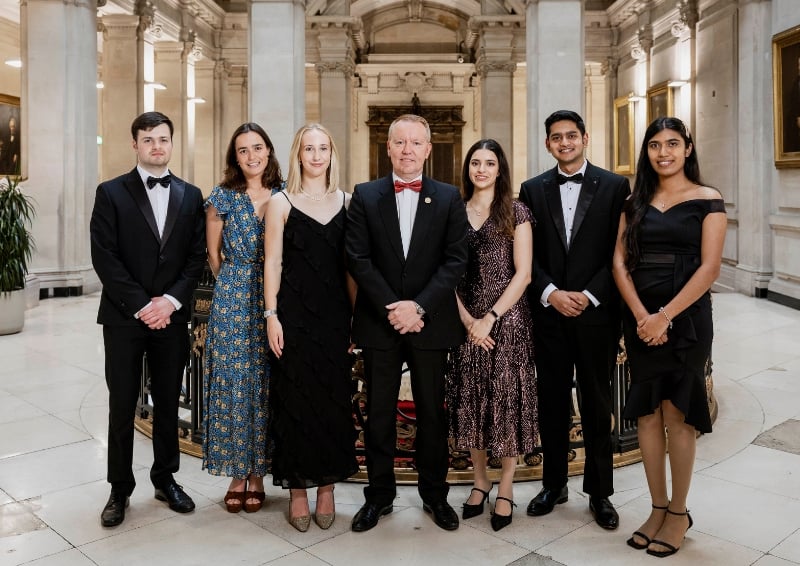
Like me, they arrived carrying a mixture of excitement, curiosity and uncertainty.
None of us truly knew what the year ahead would hold. And we couldn’t have guessed how profoundly the experience would shape us.
It starts with one application
Incoming ICE President Julie Wood is now seeking her Future Leaders.
If you’re wondering whether you have what it takes, let me leave you with this thought: submitting the application is already a success.
The hardest step isn’t being selected. It’s believing that your story deserves to be heard.

Sustainable Development Goals:
You may also be interested in

- Type
- ICE Community blog
What's the foundation of flood resilience? Information
ICE President David Porter explains why being informed about flood risk is so important for the public and civil and infrastructure engineers.

- Type
- Awards and competitions
It’s electrifying! South Wales Metro track transformation bags top award
The electrification of the Core Valley Lines impressed the judges at the 2026 British Construction and Infrastructure Awards.

- Type
- Civil Engineer blog
The long-term consequences of a really good idea
Good decisions made at speed can lead the industry down unintended paths, writes Steven Yule, ICE country representative for the UAE.